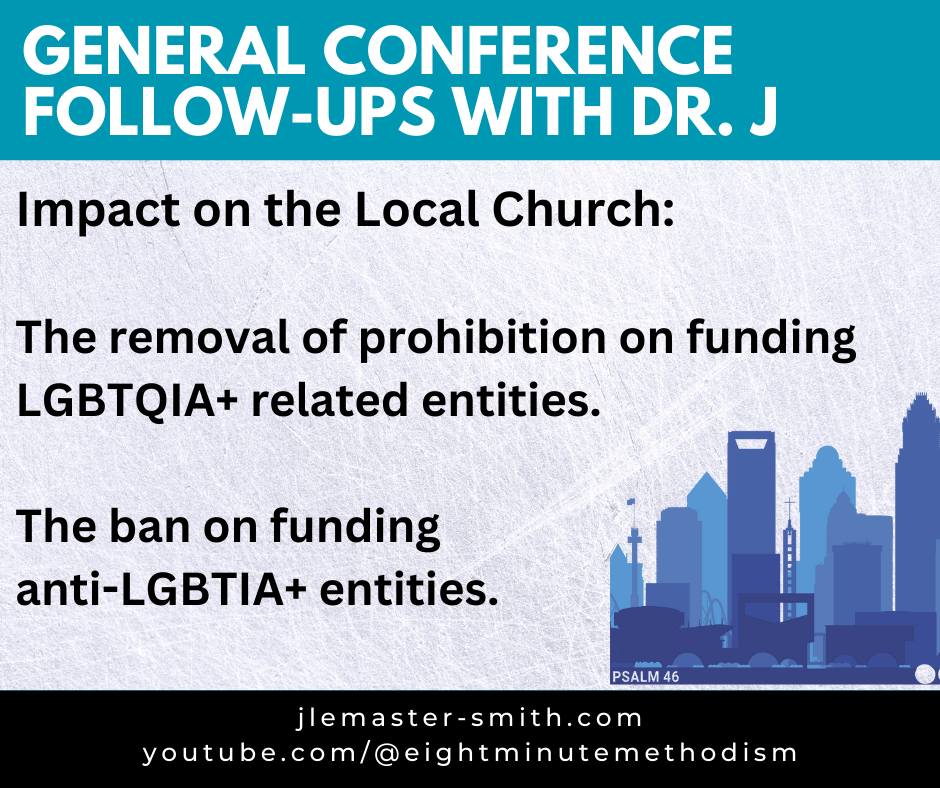
Petition 20191, which passed at General Conference, deletes all prohibitions for annual, jurisdictional, central, or General conference board, agency, committee, commission, or council giving to pro LGBTQIA+ organizations. It replaces it with a prohibition on giving to anti-LGBTQIA+ entities for these same entities.
A couple questions came my way.
Question 1: I am a conservative, and do not want my church’s apportionment dollars going to pro-LGBTQIA+ entities, what is my recourse?
To that, I have two responses:
One, make sure you know what entities you are talking about, because some of these are suicide and self-harm prevention agencies, entities that support historical research (GCAH just launched a new center), entities that promote discipleship resources, etc.
.
I doubt you are opposed to suicide prevention, faith formation, and historical research. Likely few of these entities are giving to organizations that are solely queer in their direction.
Two, the recourse you have is to vote at Annual Conference. Most of your apportionments stay in your local annual conference, and are used by local conference entities.
Pay attention to budgets, grants, and funding. Figure out how funds are distributed. Learn who is on what board or agency. Do the political work.
Question 2: How does this impact the local church and indvidual United Methodists? Can churches still order chick-fila for their meals? Can they still shop at Hobby Lobby for craft supplies? Do I as a United Methodist need to re-evaluate my purchases?
Short answer, this does not impact local churches and individual United Methodists.
Longer answer, it can impact local churches and individual United Methodists if they choose to engage it. The denomination generally cannot tell the local church how it spends its money (unless it’s doing actual nefarious work). It also cannot control what we as individuals do with our own money (although accountability is nice). However, personal conviction and congregational conviction matters. Local churches can set boycotts and restrictions on their funds (they already do). The Book of Resolutions (2012, I believe) has the process for initiating a boycott in the local church or local church entity. These boycotts happen at the Charge Conference.
Local boards can also decide where their donations go, preferred vendors based on their values (I know many churches who shop at places that honor veterans or who care for the hungry in the community). Therefore, if you are lay or clergy and convicted, talk with your local church about steps you can take. Many of them don’t realize the power of their spending both individually or as a church.
If you are committing to queer inclusion and advocacy, do the research and act. If you are committing to another justice issue, do the research and act.
Conviction leads to action.

 Jonathan LeMaster-Smith
Leave a comment