-
Persistent Leaves

As someone who loves to hike, no matter the season, the American Beech tree is a welcome site among the brown and grey winter woods. The American Beech trees leaves die like all deciduous trees, but they do not drop their leaves, instead the leaves turn a off-white paper color and stay usually until new buds and leaves emerge in spring. This process is called marcescence, and we really don’t know why it happens.
However, I think it’s an interesting image to think about in terms of rural life. Rural life is neither coniferous/evergreen, nor does it die back each season, instead, we are somewhere in the middle. I think in periods of seasonal transition, while some of our traditions, values, events, and practices, may no longer serve their life giving purpose, they persist. I don’t think they persist out of stubbornness. Instead, I think this persistence is a simply a waiting. These traditions wait for a new season and for new life, then they will drop to let the life emerge.
Maybe the reality is, the tradition, value, or even leadership is holding on because the Spirit continues to tell them, it’s not time to drop yet. The new season isn’t here yet. I think we should pay attention to this as people who care about the rural church and rural community.
Look for the traditions that we still have that aren’t dropping yet. They may not be haunting us (that’s a whole other thing), but instead, are simply waiting for a new season to emerge. A new season we haven’t fully wandered into. Our churches and communities often forget that going through winter is not a bad thing, and that life still happens, changes, and grows in those times, even if it doesn’t look like it from a particular productive mindset. But, as we go through this winter, the leaves of past seasons, the traditions, practices, and viewpoints may persist, but will not last forever.
In the end, the leaves will drop when it is time, and the rural tradition or practice will fade away when the changing seasons give way to new realities. Therefore, instead of looking at traditions that don’t make sense as harmful, look at them as a sign of the season of the church or the community, and learn what your role is in this season.
You can’t control when spring arrives, but you can prepare for it.
-
Disaffiliation Rumors, Myths, and Opportunities – #7: Voting

This post originally appeared on my Facebook (Facebook.com/j.lemastersmith on February 14, 2023).
Two questions that regularly come up are:1) Do we have to vote?
2) Do we have to have speakers from both sides come?
Short answer: no.
Long answer:
No one is required to vote. Voting is only required if you are strongly considering leaving the denomination. Just because one or two people have questions does not mean you need to move toward voting on anything. You definitely need to keep your congregation informed. It is a disservice to keep our congregations in the dark about this, because they will hear things in other places and get a lot of misinformation.
In terms of having other speakers come in, my fear is that the other speakers have consistently been misleading and disruptive. Our conferences have people trained to come and speak to the reality of the issues, and are very honest. In fact, they are actually pretty hard on our denomination in regard to how we have have handled a lot of different things. They also share what the plans are in the future, which is to create a more transparent and cooperative appointment process. The denominational speakers also work to explain the ability for us to exist together even when we disagree about many things, not just human sexuality.
We can exist together and disagree, because we, as the author of 2 John writes:
“But now, dear [church], I ask you, not as though I were writing you a new commandment but one we have had from the beginning: let us love one another.” (v5)
-
Disaffiliation Rumors, Myths, and Opportunities # 6 – Appointments, Communications, and Rural/Small Churches

This post originally appeared on my Facebook page, facebook.com/j.lemastersmith, on January 30th, 2023
Another rumor circulating is that The UMC does not care about the small and rural church (you could also include immigrant, ethnic, and inner-city churches, but I also know less about those systems). Some responses:
“We ask for a licensed local and are forced to take an elder.”
“We get pastors who don’t want to be here, because we’re a stepping stone church.”
“Our pastors don’t live in our community or want to spend time here.”
“The curriculum isn’t written for us, it’s written for big churches in the suburbs!”
This rumor, to me, feels like the most real. The rural church very much feels forgotten. There is quite a bit of research done on this. The same is true for smaller church in general.
There are few reasons why this feels the most true:
1) The greater UMC operates on a trickle down or come to the source communication style, instead of a take it to the churches information style (mailers and emails don’t count).
2) The publishers have to make some money, and larger suburban churches are the most likely to spend money on a resource.
3) Our appointment system has consistently felt less call/gift based and more “fill the hole” based.
4) They feel like they are paying for a full time pastor who is only working part time because that pastor does not understand small and rural church culture because we don’t teach it in our schools. Thus, the pastors don’t visit, don’t learn the community, don’t connect with the history. These are all not entirely true, but they feel true to the rural church. However, these are all changeable. And I see it happening. But, for some local churches, it feels too late.
Still, in my heart, I know this isn’t true, but more effort needs to be put into connecting with and empowering and small rural churches, so that they know they are not alone, they have resources available, and that our conference is working to do more than simply fill the spot. I already know our appointment process is getting more creative. I know that we are going to have to move to the bi-vocational and cooperative parish model. I know there is work being done to empower and enable laity to serve creatively. And I know folks (myself included) who are working to shift the communication, education, and formational systems.
So, if you’ve left for this reason, I understand. But if you haven’t ripped the band-aid off, I encourage you to stay, to work with me, and to help build a better denomination.
-
Rural Ash Wednesday and Lent

I’m a fan of Ash Wednesday and Lent, I truly am. But, rural folks don’t need a reminder that we are going die, and the Lenten disciplines, including fasts, photo-a-day challenges, special studies, extra readings, often feel like adding to the noise. Instead, we need an Ash Wednesday and that reminds us that some seasons end, but we carry over the fruit of those seasons. Whether it the season changes due to death, shifting in church and community life, or simply the shift from winter to spring, we get the opportunity to remember and honor those past seasons.
As we honor the past seasons, we live into the new seasons irrupting around us. In my part of the world, this is daffodils popping up in the leftover leaves and brush, people doing the work of pruning the trees, turning the fields, and cleaning up their homes. It may also include the presence of Reese’s eggs at the Dollar General, the presence of seeds and bulbs at the Feed and Seed, and of course, forsythia/yellow bell blossoms all everywhere.
Of course, rural life is regularly accused of living in the past, speaking too fondly of the glory days, and being suspicious of new ideas. This is true sometimes, but I propose rural communities have the disciplines they need to honor the seasons past and still hope for the new seasons that are emerging around them. These disciplines can easily include preparing the church and community for the new season during Lent. Just as fields are tilled, trees are pruned, and materials are gathered in agriculture, rural communities can prepare themselves and places for the new season in their lives.
This can include working to start new and revive relationships with neighbors through visiting, connecting with people you haven’t spoken too in a while, or reaching out to meet new people at events. This might also include going through church and community resources and spaces and thinking about what can be reused, what can be repurposed, and what we can donate or dispose. And this can also include planning for the coming season, and imagining what God will use our people, place, and heritage to create. All of this allows for new ideas, ministries, and relationships to find a place in the gardens of our already fertile communities.
These disciplines can come in the form of encouraging opportunities to connect with neighbors (and training people how to have a conversation if they need it). They may take the form going through home, church, and community, while thinking about how we can reuse, repurpose, or remove. It, of course, involves spending time in prayer, contemplation, and discussion about what the next season might hold for us. All of these claim Lenten disciplines and rural practices, but do so in a way that allow for it to make sense.
So, this season, consider adding in visitation, exploration, innovation, and contemplation into your rural Lenten practice.
(Also, the picture is of Ash that I dropped on my shoe, but I guess it could also symbolize the mud and other stuff we have to deal with as the new seasons comes, and that we need the right tools for the job.)
-
Disaffiliation Rumors, Myths, and Opportunities #6 – Grief

This post originally appeared on my Facebook page, fb.com/j.lemastersmith on February 5th, 2023
I have spoken with several pastors and lay folk over the past months whose churches have voted or are in the process of disaffiliating. The main thing I sense from these people is a sense of grief. Both those who want to leave and those don’t, particularly in the rural settings I inhabit, are experiencing a sense of grief. A grief for the church they thought they knew, a grief for legacy they see unraveling, and a grief that their future feels even more unclear.
I know that no matter which way you are going, you need to take the time to grieve this loss. No matter how much I say, we are dividing/merging church historically, the reality is, it still hurts. So, churches, offer services of grief and lament for the past and future that you thought were there. If and when I have time, I may write one, but until then, there are several services of lament present in our resources that can be tweaked.
-
Disaffiliation Rumors, Myths, and Opportunities #4 – Jesus and Our Theological Task
(This post originally appeared on my Facebook – facebook.com/j.lemastersmith on February 1, 2023, all reference are from the UM Book of Discipline 2016).

The rumors circulating around getting rid of Jesus or scripture or some other aspects of life are still false, but there is a section of the Discipline these rumors use to root themselves in reality. It is called “Our Theological Task” It is a portion of our doctrine and polity that allows for flexibility based on context and community.
From the Discipline (¶ 105):
Our doctrinal affirmations assist us in the discernment of Christian truth in ever-changing contexts. Our theological task includes the testing, renewal, elaboration, and application of our doctrinal perspective in carrying out our calling “to spread scriptural holiness over these lands.” While the Church considers its doctrinal affirmations a central feature of its identity and restricts official changes to a constitutional process, the Church encourages serious reflection across the theological spectrum. As United Methodists, we are called to identify the needs both of individuals and of society and to address those needs out of the resources of Christian faith in a way that is clear, convincing, and effective. Theology serves the Church by interpreting the world’s needs and challenges to the Church and by interpreting the gospel to the world.
We allow for contextual and creative interpretations of theology beyond what is written down at any given time. That means we have Methodists who believe different things about everything, including: what is a sin and what isn’t, is one of those. Who can serve and who can’t, is another
In the end, for me it is about essentials. Is the salvific work of Christ, the power of Grace, the Image of God in all people, and the Love of God and Neighbor being proclaimed?
.
If so, then the rest can work itself out. I even say “salvific work” because there are different beliefs about how Christ saves (atonement, ransom, liberation, empowerment, living example). My hope in this is that we can continue to exist together in a way that does not dehumanize or alienate, and allow for multiple perspectives.
However, if you need a concrete belief system that all members follow, then that’s something different.
-
Disaffiliation Rumors, Myths, and Opportunities #3 – Welcoming in Worship
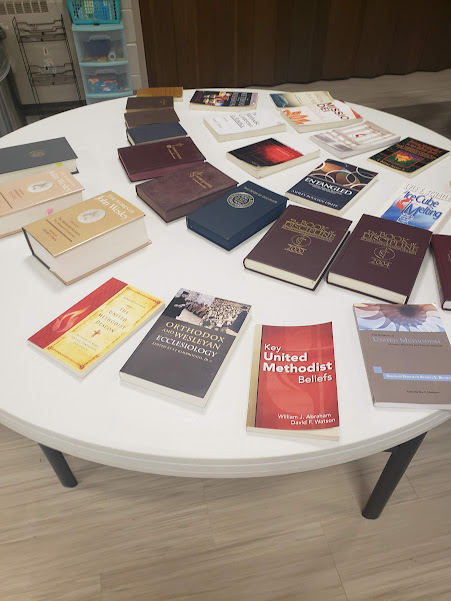
As we keep going down the rabbit trail of disaffiliation questions, another question came to me about welcome.
Can we (United Methodists) deny people access to worship?
The answer is NO.
Yet historically we have, based on race, color, national origin, economic status, relation/connection to community, marital status, and many other reasons. We have done so overtly or through inaction/cold shouldering people. The thing is the question of sexuality and welcome/allowing comes up.
Regardless of if you think it is a sin or a celebration, these are people made in the image of God, just like me, just like you, no more and no less. They have the right to worship, pray, be in fellowship, receive sacraments, give their offering, and serve, just as much you and me. They are children of God.
I’ve already heard it said in a few places that gay/queer people are not made in the image of God, not a child of God, are less than human, or are animals, because of who they are. We do not get to deny anyone’s humanity and anyone’s sacredness based on our interpretation of the Bible. And really, who are we to tell someone they can’t come to church? It’s not our church.
-
Disaffiliation Rumors, Myths, and Opportunities #2 – What about the Property?
(This post originally appeared on my Facebook – facebook.com/j.lemastersmith on January 15, 2023, all reference are from the UM Book of Discipline 2016)
One of the myths circulating regarding The UMC split is that churches need to leave so they can have control of their property and the conference cannot snatch it out from under them. The reality in this is, yes, our property (regardless of what your deed says) is held in trust for the Annual Conference.

That is, so long as your church is a church, and doing the things a church is supposed to do as described in our Book of Discipline:
-“Under the discipline of the Holy Spirit the church seeks to provide for the maintenance of worship, the edification of believers, and the redemption of the world”(worship, formation/education/care, and mission),
-and “Make Disciples of Jesus Christ for the Transformation of the World (the mission statement),
-and if your church is intentional about ministry and can sustain itself financially (or with assistance from the conference if the church is faithfully working toward ministry), then why would we close it?
Also, we don’t just close churches, there is a process that leads to a final annual conference vote, with a series of checks along the way. Usually, if a church makes it an Annual Conference vote, it is because they have less than ten active members, are not fulfilling the mission of the church, and cannot financially sustain themselves. We repeatedly offer resources for revitalization, missional engagement, congregational formation in the forms of money, consultants, and tons of online and physical resources.
If the churches choose not to take this, then the process begins. However, if you’re at a church that has less than 65 people in worship, and you’re worried, my suggestion is to ask the question: If my church disappeared today, would the community miss it?
One of my churches just had it’s calendaring/planning meeting the year, and and the other is having their meeting this coming Sunday. We have wonderful mix of fellowship, mission, education, and worship activities planned for the coming year. Neither of these churches has more than 50 people in worship on most Sundays (excluding high holidays like Easter and homecoming). And yet, they matter. They are not in danger of closing, because they are doing ministry internally and externally. The community would miss them. No, the conference is not going to close these churches. And no, the conference is not going to close your church, if it’s actually being the church.
-
More than One Way to Get There
One thing we can do to help alleviate church “growth” stress in rural churches is to remind them that there’s more than one way to get home from here. I regularly take different routes to get to my destinations. I’ve been at my churches just over six months and I’ve learned a dozen different ways to get from my house (about 20 minutes away) to the churches and back.

Almost immediately the state closed the main road I would normally take (Old Shelby) to replace a bridge, and I learned several other back roads to get here and there.
The same is true for ministry. We may think we know the way we’re going to take (or maybe not), and then we may get halfway there and find out the road may be closed. But because we’re country, we know there’s always more than one way to get there. We just have to remember that we are not in a hurry and that we have options.
And sometimes, success isn’t measured in getting to a destination, but just getting in the car and driving around, looking to see what we can see.
And my reminder is, we don’t run on gas, we run on hope.
-
Disaffiliation Rumors, Myths, and Opportunities #1 – Will we still believe in Jesus?
(This post originally appeared on my Facebook – facebook.com/j.lemastersmith on January 10, 2023, all reference are from the UM Book of Discipline 2016).
We all know The United Methodist Church is dealing with some significant issues right now. Yet, there is a great deal of misinformation going around, preying on the reality that we don’t teach Methodist doctrine well in our local churches.
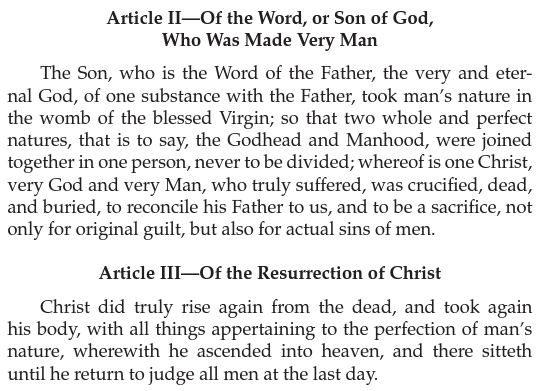
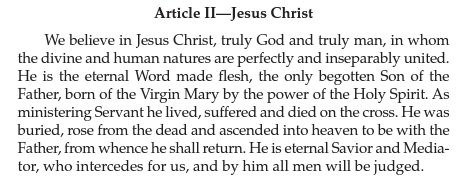
One lie that folks are circulating to fear monger is that The United Methodist Church will no longer believe Jesus Christ is the son of God, Lord of all creation, or the savior of the world. This is not true. Our doctrine–three articles of which are included in the pictures–clearly list out our beliefs about Jesus. And sure, this could change. But to change these, we have to remove a restrictive rule from our constitution. That requires a 3/4 majority vote of General Conference (our Congress) – which is between 600 and 1000 delegates from around the world.
THEN – it has to go before each annual conference and we have to have 3/4 of all voting members of all annual conference meetings vote to remove. And then, should this pass, then we have to go to the next General Conference and vote to remove or change these articles (some of which we have had since the early 1800s). I highly doubt we can get a group of 600-1000 Christians to agree that Jesus Christ is not the song of God, and then get 3/4 of all Methodist representation from around the world to vote on this.
Why would these people be Christian otherwise? In a later post I will explain the language I think they are using to fabricate this lie.
-
Subscribe
Subscribed
Already have a WordPress.com account? Log in now.
 Jonathan LeMaster-Smith