-
Expanding Theological Education
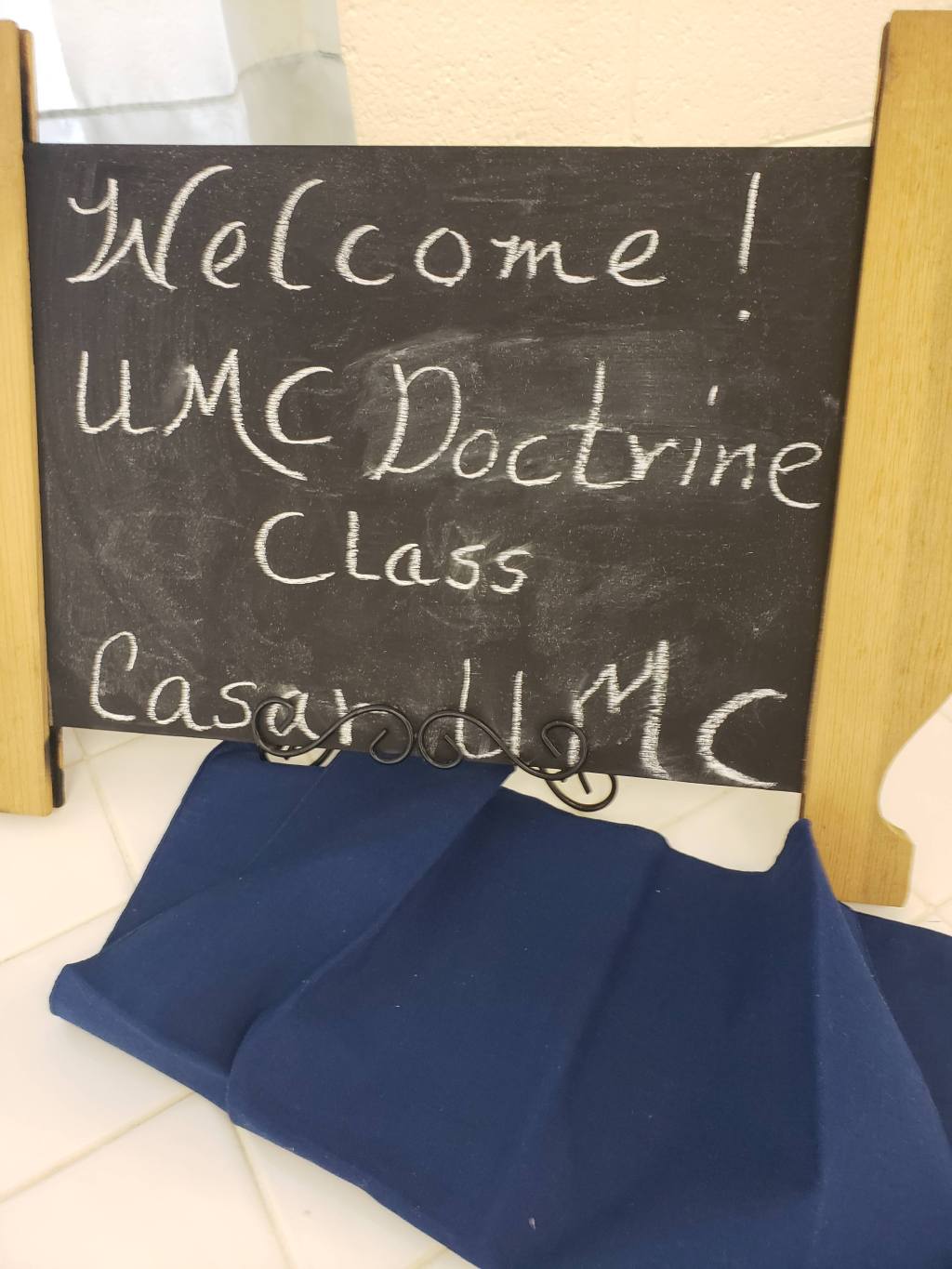
With the pandemic beginning to taper off, I am finally getting to offer in-person courses again (I know the proper protocols to maintain safety, am encouraging people to only sign up if vaccinated, mask up, and maintain distance). Some of my favorite in-person courses are United Methodist Studies courses offered in my district for lay folk and clergy. I offer each of the three courses in a two day format. When we gather, whether for United Methodist History, Doctrine, or Polity, these courses are focused on the importance of the local church within the Methodist world. Participants receive both an overview of the topic as well as practical reasons why it matters for their local churches. Those who participate have always found the course insightful, useful, and life giving.
At some point in these classes I often hear this statement: “I’ve been Methodist my whole life, and I’ve never learned any of this.” This is a common statement from many church members I encounter, whether I’m teaching United Methodism, Bible, theology, or anything else. I often don’t know what to say to folks, because I don’t want to blame their clergy who are often overworked and face a lot of scrutiny already. However, it has made me think about this problem. What I’ve come find is that it is often just a reality of the system of theological education.
In general theological education operates by potential (and often current) clergy and lay professionals attending theological schools for one of several types of theological degree. The most common and the one most often required is the Master of Divinity. Depending upon the school, this degree is usual a blend of academic theological education including Bible, theology, history, and ethics, alongside practice of ministry courses that might include Christian education, pastoral care, church administration, missions and evangelism, and others. Upon completing their degrees, these students are then vetted by their ordaining bodies and then find placement in the church depending upon their vocational goals and denominational polity. These ministry professionals often share some of what they learned, but quickly fall into the other tasks of doing ministry.
A secondary theological education stream exists where denominational leadership and offices are often the theological education experts and, on occasion hold trainings and resourcings for members of the congregations. These events, while often very helpful, are in singular locations that are large churches in an urban area. This is not a bad thing, but simply a reality that they are trying to be near population centers, airports, spaces that can accommodate large numbers. However, this is not friendly to smaller churches in rural areas and even urban areas sometimes due to travel, cost, and general anxiety of being in large and strange places.
Both of these forms of theological education are top down approaches. They begin with an expert in a central location and expect information to flow out. However, as we often experience, the information stream becomes a trickle. Moreover, theological education is far more than simple information transfer, but something that requires contextualization and integration.
Instead, I want to propose something that decentralizes theological education. Similar to my local church offerings (usually done on district/county level), I propose that we create something like an itinerant scholar. These experts in their fields, instead of expecting everyone to come to their office, offer courses on a “circuit” to use a Methodist term. Whether it be denominational studies, Bible, or ethics, many people do want to learn. Moreover, the courses need to offered in non-central locations. That is, in smaller rural churches, churches of color, and urban churches not often visited by the denomination they regularly feel ignored by.
Clearly, not everyone in every church and community wants to learn the nuances of liberation theology or the intricate history of their denomination. However, many do want to learn, to grow, and apply their learning in their communities. In fact, as I have taught these classes, many have answered calls to ministry, whether lay or clergy, and gone on to enroll in more classes, enter the licensing/ordination processes, or become more engaged in the lives of their local churches.
I am not calling for a dissolution of formal theological education, but instead a contextual expansion that allows for new and unique expressions of education that reaches the laity of the church.
I teach online and in person in ways I hope are accessible to people, particularly rural people, and would love for more folk to join me.
-
The Importance of Place


I spent some time on my parents’ land yesterday. I try to walk the land regularly, but in the past few years it’s been harder as I’ve been working more. I found myself in my grandparents backyard. I was next to Pawpaw’s old truck. The tires are now flat and it’s grown over with vines, but it’s there.
I navigated the rows of daffodils. Most of their blossoms are now dead, but the tradition is that we don’t cut them down until Memorial Day, that way the come back healthy. Irises bloom around the white oak, poison ivy is growing up it’s side. The magnolia tree, which never really recovered it’s shape after Hurricane Hugo looms large, spreading its evergreen branches.
These are all part of my memories. I have stories for all of these artifacts. But yesterday, I felt the most impact from the huge water oak tree (featured image). I walked under it as the wind blew, and I felt relief. I remember this tree being tiny. I remember thinking, for a while, that it was sassafras. My parents told me it was pin oak, which is a different tree, but what most people I grew around with call water oak and willow oak.
Michael Corbett, rural education scholar, names one rural virtue as deep place sensitive knowledge. Often we will connect this with plant identification, community history, or cultural knowledge. However, this is a limited understanding of knowledge. I think of the sense of knowing, on a spiritual/emotional level. Of knowing how experiences, places, and relationships shape our ways of knowing.
Stepping under this tree, my memories went back to mowing grass under it on a Snapper mower, of misnaming it, of the small acorns. Then it went to my tree identification unit in agriculture education class in high, and to coming back during college and after moving away and going for long walks to clear my mind and work out my thoughts.
Knowledge like this, while not unique to rural communities often finds itself connected to nature, artifacts, and experiences in these places. The spirit of generations lives in these places, and connection to place connects to roots, and helps guide us toward a future. Of course, trauma, grief, and hauntedness could can find their home in these places, and there are ways to work with and through this (to be covered later).
What this knowledge does is ground me in the world that has guided my growth and experience. However, it never does it in a constricting way. It does it in ways that allows for me to grow toward new futures. Just like the vines growing over the old truck, the roots nurture them and ground them so they can spread over time in new directions in search of new live and possibilities.
What I think is most important, is, just as this tree has grown, my relationship with the tree has grown and it still teaches me. The lesson I learned was that I am still here, I am alive, and my roots are strong. As parts of my life are strained and parts are growing, I know I am nourished by the ground on which I walk.
This, of course, leads me Christian formation, we often forget these deep relationships and connections when we offer Christ. We teach as if people are not interwoven into their community. The sort of individualized faith we often promote, fails to acknowledge connections to place a virtue, and perhaps a Christian virtue. In some cases, it is intentionally otherworldly and seeks to escape the world leaving it behind. This is harmful and does a disservice to the people, place, and faith.
Instead, a rural place based faith formation roots experiences, stories, and traditions is an excellent ecology for the Holy Spirit and the church to sow new seeds and build new futures.
There is more on this to come. I am actually doing some writing and perhaps creating useful resources for this in the future. Look for them in the future in the form of posts here, classes, and church resources. -
Joshua – Reviewing a 50-Year-Old Album

Dolly Parton recently reminded her social media followers that the critically acclaimed Joshua album turned fifty this week (April 12th, 1971 was it’s release date). A review in the magazine Cash Box called the title track one of the all-time best country records ever recorded. The song became Dolly Parton’s first #1 Hit on the Billboard Hot Country Charts and Parton earned Parton her first Grammy Nomination for best female country vocal performance. The album went to #16 on the Country Album Charts.
Enough about 1971 though, I’m reviewing the album today. I love Dolly Parton. She has been and will likely continue to be my favorite singer (and philanthropist). This is likely because she is my mother’s favorite singer and she played her albums and cassettes for me a baby. I am, literally, and cradle country fan. Still, I had never sat with this album until just a few days ago. Joshua, regularly included on her greatest hits albums, was the only song I knew from Parton’s seventh studio album.
I decided to listen to the album after driving my mom (Mama) off at home after nearly two months in hospitals and rehab centers for some health issues. I decided that I wanted to listen to music instead of the podcasts or NPR I would normally listen too. Remembering the brief glimpse at the social media post, I found the album on Spotify, clicked play, and drove through the country, taking the long way home.
“Joshua” was what I remember. A song about two lonely people finding each other despite what world said about them. The next song, “Last One To Touch Me” is a call for companionship in this life and the next, and while touching was not a highlight of the album for me. “Walls of Mind,” the third song, is what Dolly herself will call a sad ass song. I would also include the final song on this album, “Letter to Heaven,” in the sad ass categories (as well as the dead kids and dogs trigger warning collection).
Before I get into the two most important songs for me, I want to acknowledge what I would call the working class women’s songs on the album (Dolly and Loretta usually don’t call themselves feminists – and for good reason that others have already addressed). “It Ain’t Fair that it Ain’t Right” is a song that looks at a woman being left by a man after he used her for sex and “J.J. Sneed” is the revenge story of a woman left by her outlaw lover. Finally, “You Can’t Reach Me Anymore” is a triumph song of a woman overcoming a mix of abuse and inferiority. These are all excellent songs that point to the pain of women beyond the literal context of the songs.
Now, for the two songs I find most moving. “Daddy’s Moonshine Still” and “Chicken Every Sunday” are sort of quintessential “overcoming rural struggle” songs. I’ve never experienced an abusive moonshining father or being denied love and friendship because of my class, but these songs speak to me in the choices I and many others had to make about rural life and how to respond the complex realities of rural life. Tex Sample (channeling Bourdieu) speaks of the dominated culture and how it responds through music. The rural working class is often the dominated culture, and the songs provide a response to the domination through art that overcomes the real.
Of the two, “Daddy’s Moonshine Still” is more angry and tenacious about the realities of life. The chorus, sang in one long angry and desperate breath reads: “Daddy’s moonshine still was good for nothin’/ But to break mama’s heart/ And to tear our home apart/Make our lives a livin’ hell.” The lyrics speak of aging early, abuse, loss, and anger. The singer leaves home after her brothers die. She explains that she sent her mother money every day, earning it in ways she chooses not disclose. In a Bobbie Gentry/Reba Fancy sort of way, she dares you to judge her choices that got her out of the dangerous situation. For many in rural communities, this is their narrative, they are told that if they want, it’s up to them and they have to take the chance.
Unlike the anger of the last song’s anger, “Chicken Every Sunday” ends it’s chorus with a sense of resilience: “If that’s the lower class, then I’m glad that’s what I am.” This song feels like a predecessor to Parton’s famous “Coat of Many Colors,” that was released later the same year (as I am typing this, I feel like want to review that album later this year). The singer is made fun of for her plain hand me down clothes and not belonging to the country club.
In some ways, I resonate with the realities of this song more than the previous one. Still, growing up rural working class, I learned to pass for middle class, get good grades, and lose the accent (which is only just now really returning after 20+ of learning to mask it). I don’t know that I was ashamed, but I learned to deal with the realities of what was, and escape it, in a way.
I am thankful for my rural heritage and today feel a pride about my home community and the rural communities I have served and will continue to serve. Dolly Parton’s craft is one of singing songs that evoke memories and emotions that we can hold together to create a rich experience of country life.
Even though there are less moonshine stills and cotton hand me downs today, this album still rings true. Rural working women still face complex issues, love and loss still happen, and we can overcome loneliness no matter what the world says. The only song haven’t mentioned, “The Fire’s Still Burning” is, at face value, a song of someone left and holding onto hope of that lover’s return. But as Sample, who I mention earlier, reminds, our connections to these songs are not always literal. The idea of a fire still burning is one of endurance, hope beyond hope, and for me, runs toward Parton’s more popular song, “Baby I’m Burning,” released in 1978 on her Heartbreaker Album. This song of overwhelming joy offers an alternative to longsuffering (or perhaps a sublimation?).
Regardless, I leave you with my favorite lyrics from “Baby I’m Burning” in hopes that those in rural communities whose fires still burn, can burn brightly in joy.
This red hot emotion
Puts fireworks in motion
It looks like the 4th of July
There’s no use in fighting
This fire you’ve ignited
Just stand back and watch the sparks fly -
Final Fragments: Easter

There are two main scriptures for today.
Click here for Mark & Click here for JohnBoth scriptures have a Jesus who will not be controlled.
Mark has a Resurrection with no appearance and the women run away.
(The gospel ends here, the rest is addendum to make it like the other gospels).In John we have a Jesus who tells Mary not to hold onto him.
(The historic phrase Noli Me Tangere/Don’t Touch Me is here)Yes, Jesus is alive. Yes, the resurrection has happened. But, what of it?
Both of these scriptures, if you choose to imitate Christ, remind you that you are imitating someone who acts outside the bounds of society in such ways that even being near him changes things.
The resurrection means something new is possible, but only if we don’t cling desperately to the life we have now.
The sun is rising. The future is coming. We can greet it, prepare for it, and anticipate it. Or, we can hide from it, ignore it, and hope it will pass us over. Regardless, it is coming, in fact, it is already here, loosed in the world. It will do what it needs to do, even if our response is the same as the last verse of Mark:
“Overcome with terror and dread, they fled from the tomb. They said nothing to anyone, because they were afraid.”
-
Holy Week Fragments: Silent Saturday

Click Here for a Link to Today’s Scripture
Tom Waits is all we need….here’s a lyric excerpt….
Well, the moon is broken and the sky is cracked
Come on up to the house
The only things that you can see is all that you lack
Come on up to the houseAll your crying don’t do no good
Come on up to the house
Come down off the cross, we can use the wood
You gotta come on up to the house -
Holy Week Fragments: Ecce Homo

Click Here for Today’s Lectionary Reading: John 18-19
I did not expect the “Ecce Homo” to stick out to me today. Ecce Homo is the Latin Vulgate translation of “Here is the Man” or “Behold the Man.” This is Pontius Pilate’s statement about Jesus, bleeding, wearing a crown of thorns, and wearing nothing but some purple cloth in John 19. This statement expands out of this particular scene to the crucifixion and to today.
My thought is that we still don’t “Behold the Human.” We don’t behold the humans we murder to maintain empire, the humans we murder to maintain racist, classist, nationalistic structures, the murders we condone make to maintain gun rights. If we truly beheld their humanity, if we truly acknowledged their immeasurable value, the Image of God stamped on the bodies and souls, then we wouldn’t rush to resurrection, to green eggs and ham. We wouldn’t get in the car to drive to the beach.
The Ecce Homo is a commandment, from the mouth of a governor, pointing to God in human flesh, falling on ears that will not listen.
Ears that do not understand.
I return to Jesus’s words during the Holy Thursday reading:
“You don’t understand what I’m doing now, but you will understand later.”
-John 13:7 -
Holy Week Fragments: 30 Seconds at a Time

Here’s a link to today’s lectionary text – John 13:1-17, 31-35
The commentaries for today’s scripture remind us of a couple things. 1) There is a meal in John, but it is not the Lord’s Supper in the traditional sense but it connects to it. 2) The foot washing is something crucial to community to whom John writes and need to be reminded to do it for one another so they can find their place with Christ and each other.
As I was discerning what to write, vs. 7 jumped out at me:
Jesus replied, “You don’t understand what I’m doing now, but you will understand later.”I think this verse is a helpful reminder. It is a reminder that Holy Week is a mystery to us, no matter how hard we try. It has the answers to salvation and God’s Kingdom tied up in it, but every time we think we get it right, Jesus slips away again. The messianic secret is one that is never truly revealed. We only get glimpses.
The title of this post connects to a song by Gabe Lee. In fact, he runs into Jesus in the song. Here’s a link to the song:
Here are the relevant lyrics:
Bumped into Jesus at the diner, where he was blessing a bowl of mac and cheese.
Now there’s a man who spends his whole life fighting evil, best fill that boy up
With all the carbs that he can eat.
He says the king’s buffet upstairs is overcrowded and the TV’s always stuck on CNN.
Says he just wants to catch the score before the work comes in, fast food commercials flicker by
30 seconds at a time.The whole songs speaks to rural realities, however, encountering Jesus at the end of this ties it into Holy Week. Jesus is eating a meal, knowing the work is coming soon. We don’t understand it now, but we will.
Eat some carbs today. Jesus did.
-
Holy Week Fragments: Wednesday

Here is a link to the lectionary reading for today, John 13:21-32
Today’s scripture bothered me. I didn’t want to focus too much on Satan, betrayal and over explaining this. However, since, I’m not alone in my study of scripture, I turn again to commentators. Francis Moloney suggests that the thing we should look toward is Jesus’ actions in toward Judas even though he knows he will betray him.
This is still complicated, but more interesting than Satan. There are times we need to not be at the table of those who would do us harm. I’ve learned this from people far more vulnerable than myself. But, here, I want to explore something different, particularly as this scripture is sandwiched between acts of love (we get those tomorrow).
Jesus dips the bread into the cup and offers it to Judas who takes it. Judas will still betray him, but Jesus offers him love. I want to step out of cosmic betrayal, betrayal that would murder, betrayal for silver. Instead, let’s look at the disciples as a whole. At different times they betray Jesus. They abandon him in his need, sleep through his time of prayer, doubt the power of his resurrection, and more. Yet, he still offers them love.
This leads me to thinking about the rural church and morality. Jennifer Sherman explores the reality of rural working class communities dealing with loss of industry (in her case, logging) and how different community members were judged based on whether they worked, commuted, left, or relied on government benefits. I don’t want to compare Judas to people who lost their jobs in a complicated environmental decision (they logging stopped because of and endangered species). Instead, I want talk about Jesus who offers love even though the love may be misused, ignored, or betrayed.
Often I see rural churches and agencies want to only give to the “right” people who “really need it” and place judgments on people who do not seem like the “deserving” type. They often feel like people are mistreating the system and benefiting from it. This regularly stems from and leads to racist and classist assumption. Piles of forms, background checks, and suspicious looks create the sense that the love of the church is conditional. If we want to talk about evil and Satan this week, this is where Satan might be. Evil sits in the judgement; the refusal to love; and the racist, classist, and other oppressive forces that often pervade the church.
Instead, what can Christ teach us in the offering of a morsel of bread? Who would we refuse to love? Who would the rural church refuse to love in their own community?
***NOTE: I am not, nor will I ever use this scripture or others about unconditional love to condone abuse, oppression, violence, and other acts of harm.***
-
Holy Week Fragments: Tuesday

Click Here for Today’s Scripture: John 12:20-36
Today’s scripture moves away from the action of donkey rides and perfume anointing to Jesus’ final public preaching. One could easily view this scripture as just a crucifixion/resurrection prediction and use the the kenosis model of Christ.
However, Gerard Sloyan wants to explore something more identity oriented. Take the verse: “Those who love their lives will lose them, and those who hate their lives in this world will keep them forever.” We could easily use this verse for the abusive idea that the poor, the marginalized, the others should continue to sacrifice their place in society, their basic needs, and their ability to make their own future. We do this. We let the rich spiritualize sacrifice and praise the poor who “work hard” and “bear their burdens in silence.” We will then quickly judge the poor with smart phones and cars that aren’t falling apart.
This is not a helpful interpretation.
Instead, Sloyan will point toward acquisitive valuation. That is people basing their identities on their socio-economic standing. That is, particularly a collection of consumer/economic oriented markers that label one as a successful or important in society. Rural communities are not immune to this, as country music culture (one example) in the twenty-first century leans toward the consumeristic idea of life.
But what does Christ have to say to the rural world? Sloyan reminds us that the Gospel of John is a testimony to the faithfulness of God. He also points to the faithfulness of God as one of cosmic orientation, that is, all of creation is pulled into Christ in salvation. But does this include rural spaces? Are the saved pulled away from their homes, their ways of life, or their sense of connection to place? I should think not, but so often we preach a leaving of our home both in society and faith.
Instead, my hope is that we can see salvation not in terms of leaving our homes, our place, the key components of identity, and instead see them as illumined or valued by God, as spaces of salvation. Sloyan reiterates that our value, our self worth, comes not from the consumeristic/acquisitional identity but from Christ, who is his glorification illumines us. Our value comes from God.
I now turn to John Wesley’s understanding salvation’s impact on creation. That is, humans are made in the political image of God, and thus given authority/stewardship over creation. Therefore, this illumination from Christ should pour out of us onto our places. This theological interpretation counters escapist theology of getting to heaven as fast as we can. Therefore, the resurrection of Christ also leads to the salvation of the rural world by assigning its worth through the Image of God and not the valuation of the world.
Why aren’t we preaching more of this?
Side note, the Gospel of John is the Gospel I have the least experience with, so this is a challenge and delight for me.
-
Holy Week Fragments: Monday

Today’s Scripture is John 12:1-11. Click here for the link.
Mary pours a jar of perfume onto Jesus’ feet and washes his feet with her hair. Judas Iscariot (and likely other disciples) respond that they could have sold the perfume and given it to the poor. Jesus rebukes them and tell them the poor with always be with them, but he will not. Her act becomes one of adoration and preparation for burial.
Sometimes this scripture is interpreted along with the Mary vs. Martha story of working vs. listening. Sometimes this scripture gets the very confusing interpretation of “don’t help the poor.” Other times, this text becomes a third space for works of piety and works of mercy (a Wesleyan idea) in which we tend to focus on too much on piety while Wesley told us to focus mostly on mercy.
These are interesting, confusing, and unhelpful interpretations for rural spaces. Rural people are often working too much as it is. They help each other. They aren’t sure who Wesley is. Also, these are boring work/life balance stories.
Instead, I’ll focus on the woman wasting her stimulus check on fancy perfume to pour on a guy she doesn’t know well. Judas gets to be a Pharisee here. I am often the Pharisee. I struggle with the reality of worship vs. service.
Sure Jesus raised her brother from the dead. But that money could have fed their family for a year or more. But this story is about the mom who buys the nice shoes for her child because she has the money, even if just this once. It’s the trip to Disney even though the next paycheck isn’t guaranteed.
I think this scripture offers rural people the chance to be tacky. The chance to live in abundance when the world will tell them they should save their money because they don’t live in the upper echelons New York, Chicago, or even Charlotte. The rural people that don’t go to the First Church or even the second. They get to wear bright colors. They get to wear the perfume they like. They get to live as if who they are matters. Mary poured that perfume on Jesus because he mattered to her.
This scripture, for me, is a reminder that rural people, poor people, marginalized people will always be judged for living into their abundance. Whether it’s jacked up trucks or food coloring in the Rice Krispy treats, they will be judged by others. Jesus sits here, letting a woman dump $20,000 worth of perfume on him. He let her. God let her.
If anything, this texts lets rural people know that Jesus is fine with them celebrating life and the giver of life. It is a sign of joy found in the celebration and adoration of woman who has a gift to share.
-
Subscribe
Subscribed
Already have a WordPress.com account? Log in now.
 Jonathan LeMaster-Smith