-
Day 4 – Ash Wednesday – 879 Words

It’s Ash Wednesday. It’s a relatively new observance in my tradition, but I like it. It is both a reminder of mortality and a sign that spring is on its way. I have my windows at home and in my office open.
I wrote quite a bit today, and the introduction is coming together. I know that anger is what led me to apply for PhDs. This anger was from churches that seemed to do nothing in the face of shifting socio-economic realities. I know now it was not that they refused to engage, it was that they didn’t know how. It was also that the church was made of the very people suffering.
My hope is this book offers hope and possibility. Like Ash Wednesday, I want it to be a reminder of death, but also that new life is waiting just below the soil.
Daily Total -879 Words
Challenge Total – 2656 Words -
Day 3 – 713 Words

This morning I received messages from someone who needed several things from me because of something someone else needed from them. It was an issue that was no fault of my own, and I let the person know I was working on a couple other things first.
I prioritized my writing and creative work. I want to count that as win for my writing. The urge there is always to jump at the urgency, but I was able to simply add it to a to do list, turn off the social media and email, light my candle, and start writing.
Today’s writing was a continuation of the writing I’ve been doing. Today’s writing also let me know that I was working on the introduction to the book, not the first chapter. I thought this would be sort of the first essay of five that demonstrate the goal of the book, but I think it’s better for me to put together the introduction first.
That urgency led to some stress later, but it would have been there anyway and I wouldn’t have gotten my writing done.
As I write this, I’ve just finished the last meeting of my Missions class for the term, and I was blessed by so many kind words from my students. So, regardless of the stress in the middle of the day, my day began and ended with my passions.
Now, since it’s Mardi Gras, I am having some red beans and rice, a donut, and wine.
Daily Total: 731
Challenge Total: 1777
-
Day 2 – 538 Words

I woke up early this morning, around 5:15am. The dogs were antsy, so I got up with them, made coffee and by 6:30, I was at the table writing. I knew I had to leave early today for work because I am the host for a nonprofit that was meeting at the church today. The words this morning came easily once the coffee hit my system.
After that, I went for a walk. There was frost on the ground, but I’ll be at church until like 9:00pm for a presentation plus other work. The walk was beautiful. Rosie and I did about one mile, including stopping to see her cow friends. I got a few pics of nandina and broom straw in the frosty sunlight.
My writing this morning was about night, and watching cars go by. I think watching the world go by is likely a form of meditation and reflection. It is not a passive act, but an intentional observing of the moments, days, and seasons.
This is likely the only frosty morning for a while, as we have temperatures in the seventies later this week. I’ll be able to read, write, and watch soccer on my porch soon.
Daily Total: 538
Challenge Total: 1064 -
Day 1 – 526 words

I’ve decided to take on a self-imposed writing challenge. My goal is to write approximately 500 words a day, every day from now until Easter (on April 17th). This is writing 500 words for fifty days straight (inclusive of Easter and today (Transfiguration Sunday).
I’m using my blog as a space for accountability and updates about my writing (along with my other writings and offerings). My goal is to write 25,000 words or the equivalent of two chapters. There will be some editing, some rewriting, and some days where it is really forced, but I will get it done.
The goal is to get into the habit of prioritizing my writing and creative work and to share a little bit of my work with my followers each day as well, making this blog something like a writing journal. My update for Day 1 follows.
Since I didn’t get the Sporting Kansas City soccer match on any of my streaming services today, I decided it was time to work on the book. I cleaned off my dining room table except for a candle I dusted off and a daffodil I picked from the front yard. I sat down to my tablet (a cheap Kindle Fire that has Microsoft Word on it, and put my phone away.
I began writing, and it took the shape of moving into our new house when I was in second grade. It was a double wide trailer where I got my own bedroom. I felt like I had arrived. It’s bizarre what you remember from moving at a young age. I know that I remember the brick masons putting in the underpinning and being mesmerized by their rhythm with the trowel and bricks around the house. I also remember the pile of mixing sand outside my window that accidentally became a reservoir for rain water. I watched the rain come down one Saturday and as it collected from the higher spaces in the yard behind the crescent of sand, my brother and I wondered when it would spill over.
Eventually, it did spill over, but in an unexpected way. Part of the sand gave way and created a canal of water to pour out into a river that then ran down under the outbuilding and into the lower portion of back yard, soaking into the ground to feed the small freshwater stream that started near the old school bus my paw paw put in the in the cow pasture. I actually went to this creek the other day, the early frogs were very loud, a sign of spring.
-
Sanctified Gossip

The story of the woman at the well from John Chapter 4 is a story I used to find annoying. I think, because it was an overdone story about Jesus being Jesus. It gets overused as a salvation story for a way of life that is no longer feels like an issue. Women, in general, in my country are not cast out of society or judged for being married several times or living with a partner to whom they aren’t legally married.
I understand that it’s an object lesson for the nourishing water of eternal life, and I’m sure we’ve used it as a symbol for grace in the Methodist tradition over and over again. This is fine. I also think we’ve used it to speak to different types of churches and practices and how they matter less than acknowledging Christ’s presence. These are all fine and good (Also, for my theological friends, I know these are oversimplifications).
I used to think the most interesting thing was just that Jesus is talking to a woman from a different background and crossing boundaries of class, ethnicity, and lifestyle. This is still a good mode of speaking to mission, outreach, and evangelism. In fact, we often call this woman the first evangelist. She runs into town to tell everyone about Jesus.
I think these are all fine explorations of this. But I think this story has some more things to offer us. For the rural church, particularly, this story gives us the potential for a creative exploration of an extremely valuable rural practice – gossip.
We speak to the sin of gossip, the way it can tear apart families, communities, and churches. We talk about it with such disdain, and we all love it. I think it’s such an interesting rural past time because it’s how news spreads. “Oh, Didn’t you hear” or “I hear that church is getting a female pastor,” or “I heard they let them have coffee in the sanctuary.”
But, then the gossip can be of use. Oh, Mark and Maria’s house burned down, didn’t you hear? They lost everything…Herb and I are giving them the bed out of our guest room.” Or, “I have a friend that’s going through a hard time, don’t you have connections at the women’s resource center?”
See, with this story, Jesus knows these things about this woman because he’s Jesus. Especially in the gospel of John, he sort of knows the story before it happens. However, since we aren’t Jesus, the way we would find out about this woman is through the rumor mill. We would hear of her marriages, the man she is living with. I think we would also hear about the struggles of single parents, of the elderly trying to cope with loss, or of dozens of other things.
Gossip is one way of gaining what Michael Corbett calls “Deep Place Sensitive Knowledge.” And with that knowledge we can begin to connect and create together. Just like Jesus offers the woman new life, our using of the rumor mill to find and help people, to seek out companionship, creative solutions, and simple clarification of information creates a lot of potential. When it begins to offer new life, connection to community, and a sense of creative hope, it is then sanctified.
With sanctified gossip, we move past neutral or toxic spreading of information, and toward a sense of rural faith that knows how to use what it has so it can better it’s community. If we teach the value of using this information to help, create, and understand in our churches and communities, then we can begin to open up futures just by listening to the grape vine.
-
It bears repeating…

One thing rural communities rely on is repetition. Repetition creates consistency, memory, and tradition. This repetition matters, whether it is football of Fridays in the fall, the festival on the first weekend of May, or knowing who to call when someone in the community dies to get the prayer and meal train going. I’ve learned this is crucial even to simply becoming part of the community. I walk around the central part of Hildebran at least three days a week. The cashier at the gas station now recognizes me. I have used the same tree service, plumber, gutter guy, and electrician several times (old house that we’re updating), and now if they see me in the yard, they blow the horn. My terrier, Rosie, likes to stop and see the cows if we go on our walk early in the morning.
This virus has disrupted quite a bit of that repetition. So many fairs and festivals have been postponed or reformatted. Around here, there is a regular chance that the football game will be cancelled because of an outbreak for one or both teams. Churches are unsure how and when to have funerals, and many of the funeral traditions of communities have been put on hold.
My fear with the pandemic is that the social interruption will leads to a frailty in the community. With the reality that less people will be participating in church and that many who were invested members will likely fade away, what comes next for this repetition?
My first thought is remembering the patterns but learning new ways of repeating them. It may not longer be feasible to have x or y event in the way you’ve done it for decades, but you can find something that it can move into being.
However, one thing I am not going to recommend (although, even six months ago, I might have) is rushing to fill voids with a ton of new things. My thought is to, instead, pick one or two previous things and begin to make tweaks to them for more rich engagement and meaning making. I would also simply see where the members of the church and community are already involved in pattern remaking and support them. Find people who can partner with them.
The church and rural community does not need gimmicky new and improved things to save it. It needs to sit with its identity, ministry, and community and figure out what it means to be the church in the present times. Not the future, not the next days. I keep seeing church and academic advertisements for this being the “in between time” and to get planning for what’s next. It’s been nearly two years. This is the “time.” There is a future, but it will grow out of the present, not emerge as something new.
I have a hope for the church using its repetition skills for meaning making, heritage transforming, and future building. I also know that this will not be smooth, it will not be instantaneous, and it will not be painless. We have new patterns to form and relationships to rekindle. Let’s get to work.
-
“Heavy dreams are for toting around”

Mighty long shifts are for working
Zack Bryan, “Quiet Heavy Dreams”
Heavy dreams are for toting around
Let’s pretend there’s a place to go
Where I can lay this hacksaw down.
This lyric gives some language to my feelings as of late. The past couple of years (not just the pandemic, but life itself) has been a mighty long shift. We have these dreams that we keep thinking we can get to at the imaginary end of the shift we are all caught up in. We carry them with us. We keep thinking that our shifts will be over, and we can work on these dreams and to work out our grief.
But we know that the shift doesn’t end for a while. This pandemic is our reality, and, while there is probably an end, we have to stop assuming all our dreams and grief can wait for it.
Maybe I’ll have more to say later, but really, I’ve been in a place of acknowledging grief, anger, and how that can help me to do the work of equipping and supporting people in ministry as we navigate a perpetual grief.
-
Death and Deviled Eggs
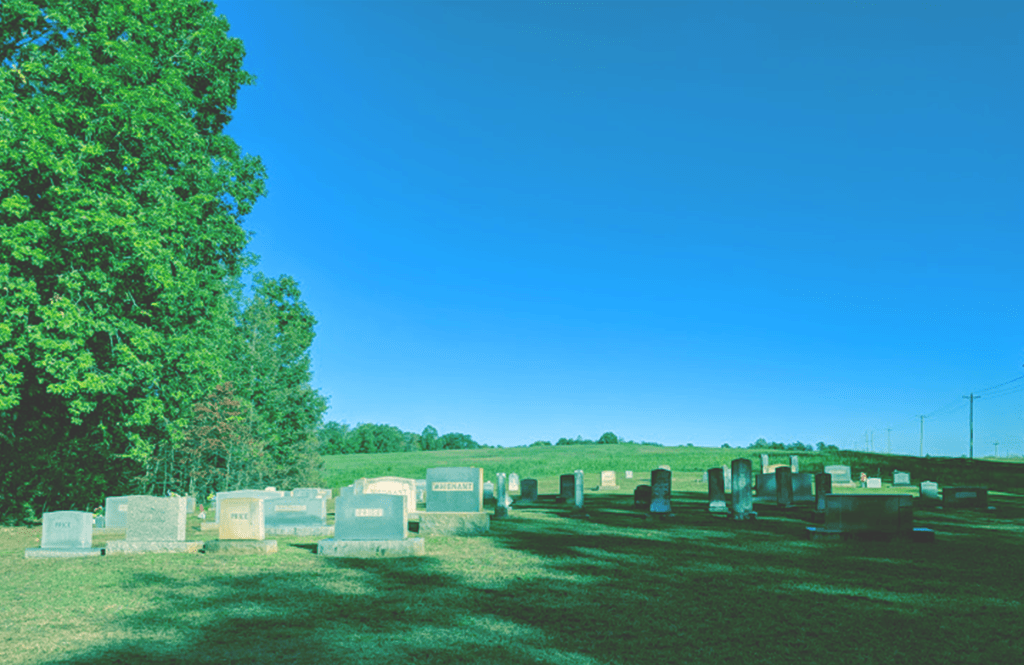
A few years ago, I was on my way to a funeral. An in person, non-masking, church member funeral with a receiving of friends, a service, and committal. Funerals remind me of funerals, the same way this Christmas will remind you of last Christmas. So many of the practices are the same.
At this funeral, there was receiving line. We stood in a line and shuffled past a table with pictures of the deceased and some of favorite things, past family and close friends, shaking hands and hugging the few we knew. Then, and I can’t remember if this actually happened at this funeral or at dozens others that I’ve attended, we walked past an open casket, with a body. Maybe there are comments, or silence. Tears may be shed, but it’s mostly silent with some chit-chat about flowers and the jewelry she has on.
During the actual funeral service, a few songs were sang, scripture was read, prayers were said, and a pastor eulogized about the woman’s faith, her love for God and her family, and the hope of her example for us all. It was a solidly Methodist funeral. John Wesley suggested that funerals should be teaching tools for how to live a faithful life toward salvation. (John Wesley also said it was a sin to cry at funerals, but it’s okay to not always agree with him). Other funerals I’ve been to had sermons about what comes next for the deceased, and on occasion, sermons about getting right with the Lord because you want the same assurance of salvation the deceased had.
I didn’t stay for the committal.
The receiving lines are what made me think. It’s a strange practice to get in line because someone has died. But we do it, at least in part, I think, to try to bring some sense of order to something that we cannot order.
If we step outside of our funeral practices, which, of course we can only partly do, we see a lot of things that really seem to be trying to bring order. Whether it’s bringing the family food. The wearing of black. The viewing of the body.
Over time we’ve chipped away at funeral practices. The sitting at home with the body, the months long period of morning, the stopping clocks (time can no longer stop for death, even in rural worlds), time off from work beyond one or two days (again time doesn’t stop), and funerals within a few days. Some of this is because of families being far more spread out and others are because of way society views death.
Death is often something to be observed in passing, not something, participate in, respond to, or make something from. Death isn’t valuable, it isn’t something that makes money or increases trade.
We also don’t teach death. As a child I was present at a visitation or funeral for family or friends at least once a month (it felt like this, even if it wasn’t true). I have memories of asking questions about a man sleeping in a casket, smelling carnations, and coloring on a note pad during the service.
Yet, today, we shy away from teaching children about death in many circles. Perhaps parents want to preserve innocence or maybe they want to deal with children as part of the process. I don’t have answers to that question.
But I do have a feeling about funeral practices. I have a hunch that the funeral practices, the means of creating order or organizing meaning through song, processions, flowers, and deviled eggs holds in it the tools for a rural practice of organizing meaning and creating…maybe not order, but creating something.
Part of my doctoral studies was congregational studies and qualitive research. My plan is to utilize this in order to study rural funeral practices in search of stories, images, symbols, that can point toward rural life. Funerals, I think, are designed to point toward life. The life of the deceased, the life of the community, and the life beyond life, whether heaven or legacy.
Look for more information on this soon. Maybe you can be part of my research.
-
Summertime Update

Does anyone else have seasonal playlists? I have a summertime sooth playlist filled with chill country music. I built it last year while I was tearing out walls in the basement before the basement waterproofing team sealed the cinderblock walls. It includes, of course, the song “Summertime” by Orville Peck. I discovered Orville Peck through Grady Smith a Youtuber and country music commentator. As I started listening to him, I fell in love with his sound and his lyrics (along with his masked aesthetic).
In an interview with NME magazine, Peck states “Summertime can be a season, a person, or a memory of a happier time that can be difficult to visit. Ultimately this is a song about biding your time and staying hopeful – even if it means missing something or someone.” It’s been a weird year and a half, and as my dad suspects, it’s not over yet. Yet, we have to figure out what’s next, and while it feels like we’re missing something, someone (or multiple someones) we can still stay hopeful.
I don’t want to talk about coming out of a pandemic or getting back to normal, I want to talk about what’s next. Today, June 1st, I am launching my professional Facebook page as the first in a series of new endeavors. Following that, I plan to create Facebook group for Rural Discipleship. This will create a space to share resources, connect with others in rural ministry, and engage in the new possibilities for rural ministry in the 21st century.
Beyond social media, I plan to begin work on a VLOG that serves both educational and affirmational purposes related to rural life from my creative and hope-filled perspective. I also plan to work on a podcast that will focus on a different rural idea or experience each season of the show. The first season will focus on rural funeral practices and how they might serve as scaffolding for resurrection in rural spaces.
Finally, I am teaching a ton of classes this summer and fall! Two new classes in country music are set to launch in the new few weeks. One focused on personal spiritual formation and one on church leadership. I am also teaching a rural ministry class for Wesley Theological Seminary and a continuing education course “Teaching the Wesleys in Your Methodist Church” for Hood Theological Seminary.
I also plan at least one webinar series with Hinton Rural Life Center, and am teaching in person (For the first in 1.5 years) for my district in UMC studies. And this is just the summer!
In the fall I plan to offer my rural ministry certification again with BeADisciple.com, as well as offer courses with tentative titles: “Parables in Rural Places” and “Holidays in the Country.” I also have dreams of a food centric course as well. If the Country Music courses go well, I may re-offer them as well.All that to say, summertime is going to be fun, and I look forward to exploring the beauty this season offers.
-
A Can of Soup
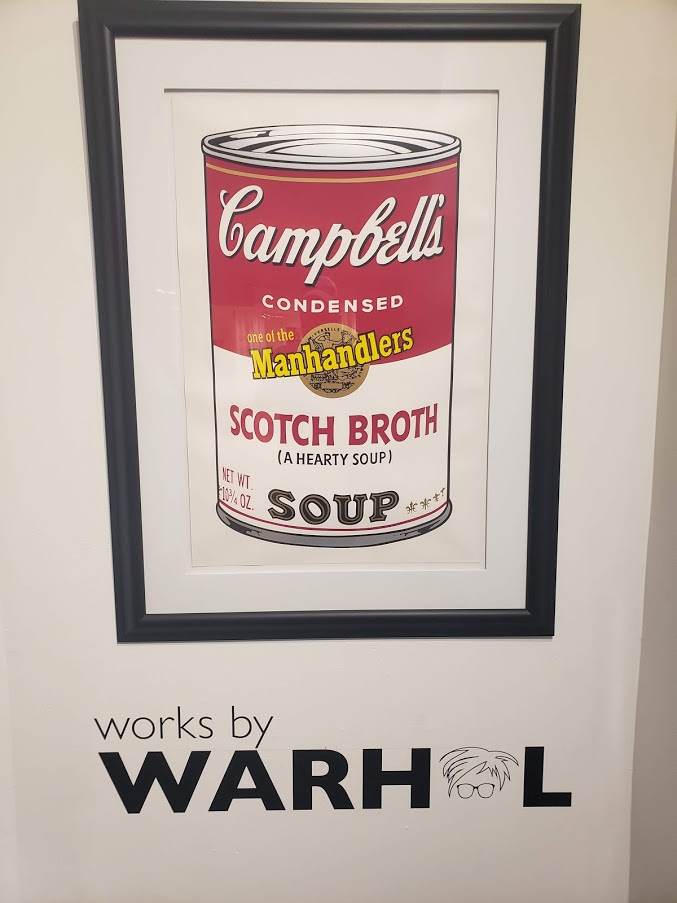
My wife’s Valentine’s Day gift to me was a trip to our local art museum. They just opened an exhibit titled “The Works of Warhol.” For years, Andy Warhol has been my favorite artist. If I am ever in a city and they have an art museum, I always check to see if they have Warhol pieces. I’ve been search for the soup cans since college. In fact, I made it to the Museum of Modern Art a few years back hoping to see the soup cans, only to discover they were in Paris for a museum show. When I finally found a soup can, it was ten minutes from my house. It was the can of Scotch Broth at the History Museum of Art.
A lot of people do not care for Andy Warhol. They don’t see the value of his art which is just a picture of a banana, or 100 Coke Bottles, or a facsimile of Brillo Box. To be fair, it’s not the art of Rembrandt, Da Vinci, Michelangelo. It’s not the fine art we often think of as “art.” However, when time is spent with some of Warhol’s rationale as well as the value of what he chose to do. He painted what he saw. Celebrities, food, cleaning supplies, and religious icons are some the things that he paints, prints, or builds. He grew up working class. He ate Campbell’s Soup on an almost daily basis. He was a person of faith. His mother read celebrity magazines and loved watching them on TV. He wanted to paint the things in the culture. Note: I’m not linking sources to all of this, but I suggest you start with the Wikipedia Article and warhol.org.
In Warhol’s art, he brings the things regular people see everyday into the conversation of art and philosophy. Consumer products and household items become spaces conversation and admiration. I think of the soup cans. Once I showed pile of soup cans and asked a class to draw what they saw. They saw a collection of different things. Some were very literal, others were imaginative, and others were nostalgic. No two were the same. The time think about soup cans led to stories, remembering, and creative idea.
I also think Warhol’s art can remind people that their lives, experiences, and art matters. It can let them know that their experiences of life and culture are of value, if we let it. We’ve sort of quickly placed Warhol on some esoteric pedestal instead of celebrating the everyday with him. Beyond Warhol’s work, the celebrating of things people like, but paying attention to what they display in their homes, offices, and churches. Stained glass windows, hand maid prayer blankets, old baseball trophies, and pictures of war heroes are some of the things throughout the halls of my church. These all matter. These all connect us to different things.
Within my work, I want to be like Warhol and relate the rural experience to the things that matter. There’s a reason my mom has as collection of old Coca Cola glasses. Memories are tied up candle sticks. A story of faith is connected to an old Bible on a shelf. The fact that the old scoreboard is at the softball field next to the new one has a message. It’s up to us to see how those things could open up space for new futures to emerge.
I wonder if we took seriously the things rural people cherish, the items the use daily, the things they assign memories and significance and turn them into art. Not art in a museum, but something to consider, something to inspire. Rural communities are good at lifting things up, both sacred and mundane. But the next steps are crucial, the steps of reflecting, imagining, and responding to the item. So often we stop with the celebrating of a thing. These steps are not intended to be critical or pick apart traditions, but instead, serve to expand the tradition.
A soup can, a tractor tire, or a coffee pot can make open doors and create new connections that rural communities can live into.
I know I should provide examples, and explore this and other topics, and I will. Some resources should become available this summer with blog posts for how to use them.
-
Subscribe
Subscribed
Already have a WordPress.com account? Log in now.
 Jonathan LeMaster-Smith