-
YouTube Video: How does the General Conference Work

We’re getting closer to General Conference, and it’s time for a new video! Join me as I attempt to explain the beauty and chaos of what happens at the General Conference.
Click Here -
YouTube: What does the General Conference Do? (Part 2)
https://youtu.be/3dUT_TGq8xsThis week’s video is part 2 of 2!
I’m exploring what the General Conference does and what that might mean for local churches. Also, Taylor Swift might pop in for a second. Also, yelling.
-
United Methodist Monday: Election of Delegates to General, Jurisdictional, and Central Conferences by Annual Conferences
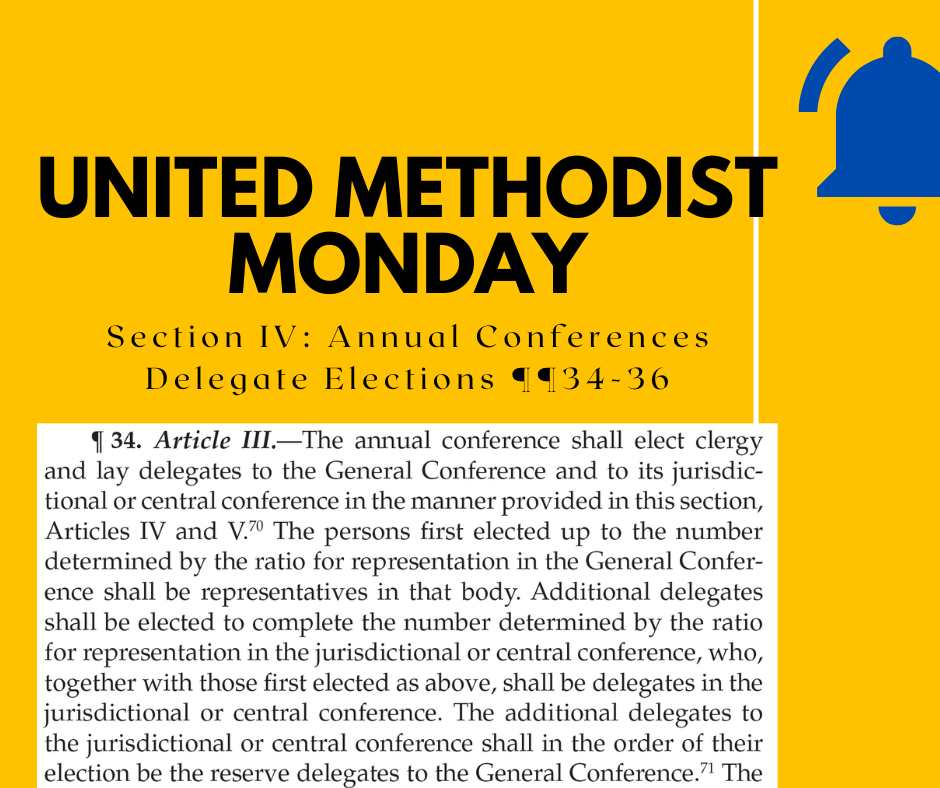
¶¶ 34-36 Outline the requirements for election of delegates to General and Jurisdictional Conference.
Essentially, annual conferences elect their representative delegates to General, Jurisdictional and Central Conference (Jurisdictional is a region inside the US, Central is a region outside the US). They elect based on a ration determined by the General Church. General Conference delegates are elected first, and then the delegates to the regional bodies. The regional body delegates serve as reserves for the General Conference in order of election.
The clergy people elected must be elders and deacons in Full Connection in that annual conference and at time of service(fully ordained by the annual conference) and they are voted on by elders and deacons in full connection, associate members (local pastors approved by annual conference for special relationship), provisional members in their residency period who have completed all education, and local pastors who have completed all of course of study or a Master’s of Divinity/educational equivalent from an approved seminary.
The laity delegates are elected from the laity within the annual conference who have been professing members in good standing for two years, and actively involved in The UMC for at least four years. The delegates must be elected (appointing or selecting of delegates is not allowed).However, caucusing and organizing may occur to have clergy and laity elected for various reasons. Some annual conferences work hard to elect delegates of varying ethnic, gender, and sexualities. Other annual conferences work to elect folks who have particular theological/political leanings. Regardless, so long as they abide by the rules set forth in the Constitution, they can create any process of election they choose.
-
YouTube: What does the General Conference Do? (Part 1)
This week’s video is part 1 of 2!
I’m exploring what the General Conference does and what that might mean for local churches. -
Holy Week Thoughts
I’m pretty sure I post something during Holy Week each year. When I think about this week, I am often just tired. I think we do too much. The pomp and circumstance keep building and the payout is the same.
Regardless, this Holy Week Holy Week, I’m reflecting on things that are happening in my life and the worlds I occupy. Since May of last year, Shannon and I have experienced a lot of changes. A mix of health issues, job changes, the loss of one of our dogs (he was 16 and had lived a good life) have led me to think more about how I spend my time.
In doing so, I’ve made some personal and professional choices to help provide some creative opportunities, focusing on particular jobs, and narrowing down how I understand my vocation. Amid these changes, I put together my sermons for Lent.
Like last year, I let the scriptures lead to country songs that spoke to the meaning I was hearing in the text. Emily Scott Robinson, Dolly Parton, Willie Nelson, Johnny Cash, Reba McEntire, Gabe Lee, Natalie Hemby, The Highwomen, Ashley McBryde, and Kacey Musgraves settled in as the singers that would help bring these scriptures to life. I realized today, as I only have four songs left, I had selected songs, that brought out a tenant of the scriptures I was not expecting.
The common theme was community. That is, not just community, but community that gives meaning in the face of tragedy. Not every song is overtly about community, but they all deal with relationships. Whether relationships with lovers, friends, community, self, or place, they all speak to relationships.
I don’t know if it’s the Holy Spirit trying to show me what these people need to hear, what I need to hear, or something else, but I was struck by this. That’s not to say community is a novel thing or sermons on relationships have not been preached before. Instead, I think it’s that people needed to be reminded about the purpose about community.
I’ve consistently been thinking about community for years. My dissertation is partially on the beauty and power of community. My fear, though, is that Christianity, at least American Christianity (even my beloved United Methodism) is failing at digging into the value of community. I still think Jean-Luc Nancy is the most right about community. Community is how we experience death.
But more than that, community is how we can face death. It’s how we can survive the agonizing pain of loss. And how we can deal with the finality of life. In the first three months of 2024 my churches have experienced 6 deaths (some members, some closely connected). Since I’ve been here, I’ve participated in or been to over 20 funerals in this community. And those are just the one’s I knew well enough and was able to attend.
My sermons have often been about grief, experiencing death, and the memories that still follow us around. That’s not by coincidence. I know people need these sermons in order to process and transform their grief into hope.
As I move toward Good Friday, I realized I picked a song that doesn’t feel very good Friday. I picked “Lindeville” by Ashley McBryde. It’s a song from the perspective of the clock tower in a rural small town. It’s a beautiful song that is also has some melancholic tones. A song that speaks reality that death does happen, but that in death, we find our way, find who we are, and what matters.
I think maybe why I picked these songs, especially this one, is because we don’t need another set of sermons telling us we’re flawed sinners. We don’t need more judgment, more self-flagellation. We also don’t need an everything’s going to be okay set of sermons. Easter, as much it is about new life, does not negate the real pain of life, yet, we get too otherworldly pietistic or the resurrection gives us rose colored glasses.
What we need, at least from where I sit, is to be reminded that if as long as we don’t give up on each other, on community, we can experience the resurrection of knowing that though we may die, we will not die alone. And in that knowledge, we can begin to transform the grief of death and loss into the hope that can change the world.
-
“The Annual Conference is the basic body of the church…”

I do a regular Monday post about United Methodist Polity on my FB Page, but will be posting it here as well (and on the YouTube Channel) from now on.
¶33 is quite possibly my favorite section of the Constitution of The United Methodist Church. The paragraph solidifies our polity of connectionalism as one that is rooted in gathering, not isolation.
It lists out the rights reserved for annual conferences. Those listed include:
- election of delegates to General Conference, Jurisidictional, and Central Conference,
- voting on amendments to the Constitution,
- matters of character and conference relationship of clergy (reserved for certain levels of clergy and designated lay folk)
- and such other rights as have not been delegated to the General Conference under the Constitution.
This last one is more fleshed out in other places, and includes:
- opening and closing of churches
- designated contextual missions for the region
- providing resources and information to the local churches
- and, due to the nature of this being reserved for the Bishop, the appointment process for providing local churches with pastors (and other things.
One of the key realities of the recent disaffiliation process is that churches do not understand connectionalism (and this is likely because clergy do not understand connectionalism). Yes, the LGBTQIA+ issues were a catalyst, but in many ways, it was a movement of local churches wanting control and power.
Fear and anxiety during the past decade due to political animosity, pandemic, mistrust of authority, and the decline of religious affiliation in America led to desire for isolation and power. Fear of church closures, appointment of pastors they did not like, and assumptions about the future of the theology and practice of the church led to the disaffiliation.
But, as I regularly state, this is not just the fault of the local church. It is the fault of the clergy, the laity, and the conferences as a whole for not teaching the value of the connection. The annual conference is a space for ministry collaboration, creation, and innovation. Particularly, my annual conference has staff and volunteers working to enhance communications, financial sustainability, discipleship, children and youth ministry strategy, church vitality, justice, rural issues, urban issues, and so much more.
My annual conference is also working to create more avenues for educating and empowering laity for discipleship and leadership. It is offering grants for missional engagement, church vitality, spiritual renewal, leadership development, and other creative and spirit minded activities. Moreover, work is being done to bring people together to share ideas, celebrate successes, assess failures, and fellowship together.
The thing is, with all of this, it requires that people in all parties make an effort to do the work. This is increasingly necessary of the annual conference representatives. This is no longer a meet in the middle, it is a go to where the people are, communicate as directly and as often as possible, and rebuild these essentially frayed (if not severed) relationships.
But, and I say this as someone who is a local church, the local churches and their pastors have to also do a better job of being open, willing, and interested in the act of connection. The clergy who hide in their offices, who only do their job and go home, and don’t teach about the conference or Methodist realities on a regular basis, this is why we have a problem. This impacts the laity who also often feel disconnected from the church. I firmly believe if we actually taught our local congregations why it mattered, they would be involved and supportive in ways we can’t even imagine.
I think this paragraph offers a hope for a future, but it requires that we do things that the conference make the effort to go to the people, and that the people. Methodist understandings of connectionalism means we are not alone, not only do we have God, but we have a global collaboration of people from diverse backgrounds, theologies, and practices, that are working to transform the world.
-
YouTube Channel Announcement!
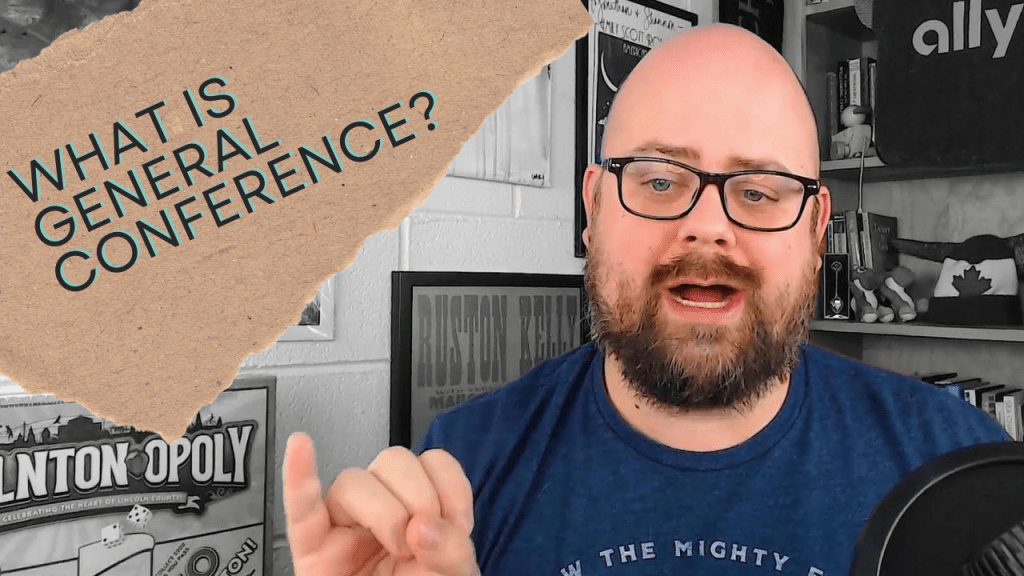
Alright y’all,
I’ve been working on this for a while, and now it’s time to unveil it.I’m producing a series of YouTube Videos about Methodist Things!
First off, of course, is a series of videos on The UMC General Conference.These videos will come out on Thursdays and provide knowledge about What General Conference is, how it works, and what it does!
I hope the are informative and entertaining.LINK: https://youtu.be/WgW2lb5ZSE0
Please! Subscribe to the channel, share this post and any other videos I post, and just tell other people. -
Let them Lobby
This topic is about a month old, but I wanted to mull it over a bit before responding.

According to UMNews.org the Wesley Covenant Association and Good News Movement, among others, will be lobbying at General Conference in April. They will mostly be working to convince folks to join the Global Methodist Church (which formed in 2022).
Many folks, like Lovett Weems (a scholar who I respect deeply),suggest that the time for disaffiliations is over. I agree, and so does our polity as the disaffiliation legislation expired in December 2023. He believes we should move on in the spirit of Wesley. He writes: “They [the General Conference Delegates] have chosen to remain not because they all agree, but because they are willing to live together despite differences, knowing that disunity is incompatible with Christian teaching.” He also notes that they need to do only things that strengthen The United Methodist Church.
In many ways, I agree with Weems. I think the people who have remained want The United Methodist Church to thrive. I think we should be working toward things that strengthen our connection. I think the time for disaffiliations (at least so much as they were formulated in 2019) has past.
However, I think I want to the Wesleyan Covenant Association and Good News movement to be there. Not because I am an agent of chaos and discord, but because I think it is up to those who are remaining United Methodist to provide a convincing vision and plan for the future. If people are drawn to the plans of other denominations, let them go. Bid them well.
And, the reality is, while I love The United Methodist Church, I don’t think we have a convincing vision at this point. I don’t think we are unified on our goals. I don’t think we know what comes next. And, that is fine, but I think we need to be clear on it. We are in, as CGP Grey calls it, “the very messy time.”
We are a very complex and global denomination that is struggling with many things at once. We are also a denomination that has failed at teaching what Methodism really is to our members (and the world). We have people in our churches waiting to see what actually happens at General Conference, and whether we make decisions they can live with.
However, one thing that I’m not here for is a circling of the wagons by any party. I think the Global Methodists should be there, and if they have a better offer for some, let them leave. But, I also think we should work to have some expectations of respect and decorum that doesn’t end with us disintegrating into racist, homophobic, and colonialist slurs.
The responsibility is on us to raise our flag higher and work harder to create a denomination that is truly connectional, contextual, diverse, and unified in Christ. This is going to require prayer, discernment, and a trust that we can push past fear and judgment toward love and creativity.
-
Working to Use the Blog More
In reality, I am just not getting to the point in my life where I am scheduling time to write and create into my schedule. I am finally scheduling writing and reading time into my week.
My plan for the coming year is to actually write on this blog (or cross post from my socials), so that I am saving things in this space.
On top of that I plan to begin a YouTube Channel, keep up with my podcast, and get some articles and at least one book complete.
I am looking forward to it, but also, I know it will require solid discipline and a practice. My hope is that I can regularly check in and update here alongside my content posts.
-
Thoughts on the Correspondence Related to Wesley Memorial UMC

I have received several messages related to the status of Wesley Memorial United Methodist Church in High Point, North Carolina and the various emails, letters, and more that have gone out advising folks to vote for or against the disaffiliation of this congregation. I want to provide some insight based on polity to the situation as well as some thoughts on what this means going forward.
My opinion will follow at the end.
First, there have been various writeups, rumors, and postings circulating about Wesley Memorial United Methodist’s clergy, staff, or leadership manipulating the process of disaffiliation voting by adding several new members over the weeks leading up to their disaffiliation vote. The reports are these members being added from other congregations who never attended or plan to attend. There are also reports of all of their clergy planning to leave The United Methodist Church and united with The Global Methodist Church (the new emerging denomination). The responses come from former bishops, prominent clergy in our conference, the leadership of Wesley Memorial, and at least one anonymous letter. Of course, those advocating for voting no on the disaffiliation of Wesley Memorial will lean into the manipulation of the process and those advocating for them allowing them to leave will point toward no violation of any polity/rules.
.
Three things comes to mind here, and they are particularly tied to a couple of recent events in our denomination:1) Those advocating for voting no on disaffiliation of Wesley Memorial United Methodist Church (or any other church) will lean into language of covenant, sacred trust, and connection. The Trial of Bishop Carcaño (which I covered in depth early this year) reminds us that violating sacred trust, connection, and covenant are not chargeable offenses. Actual charges of violating the rules or committing other chargeable offenses have to be brought forward and dealt with in our Judicial Complaint Process.
However, one thing to note, while official complaints have this process, a recent item in the Judicial Council’s Docket (1023-04) points to the question of whether clergy are doing their duty according to ¶605.7: “The annual conference shall make inquiry into the moral and official conduct of its ordained ministers and local pastors….Questions relating to matters of ordination, character, and conference relations of clergy shall be the business of the clergy session. The actions of the clergy session shall be for and on behalf of the annual conference.” Moreover, ¶604.9 reads: “The annual conference shall have the power to make inquiry into the membership status of the local churches, and where no members have been received on confession of faith during the year, it may require the pastor and the lay member to appear before the appropriate agency and make explanation.”
This is another place that action could be taken. However, neither has been done on a regular basis in the past years. They feel like formalities or procedural votes at best, and we have not taken the time to engage in these questions. These two spaces are where we might deal with the issues at hand and seek to address issues of connectionalism, sacred trust, covenant.
2) The question actions taken by Episcopal Cabinets and Annual Conferences in response to such issues have been brought up. These are the action taken North Carolina Conference Cabinet related to the closure of Fifth Avenue UMC in Wilmington and the action taken by the Arkansas Annual Conference related to First UMC Jonesboro.
.
I’ll start with the issue in the NC Conference. The closure of Fifth Avenue UMC Wilmington was done based on actions of the bishop (Bishop Shelton) and cabinet of the annual conference naming a series of exigent circumstances and rooted in both historic documents and a desire to keep that facility in the conference. One of the declarations in the resolution for closure read:
WHEREAS, contrary to the expressed intention of the donor of the original property for the Church that the property be used forever after as a place for preaching God’s Word by United Methodist ministers, the congregation has initiated a procedure seeking for the Church to disaffiliate from the United Methodist Church…
The Judicial Council will likely rule on this in the next week (Fall Docket Item 1023-06). Should our current bishop (Bishop Carter) feel there is a need to keep the facility (not the people) in the hands of our conference, he and the cabinet could have taken actions. However, this has not been the case.Second, the FUMC Jonesboro issue is related to the annual conference not allowing disaffiliation of the FUMC Jonesboro congregation, based on the belief that certain actors were doing work to circumvent or manipulate the process. This is more closely related to our issue. The reality is, do we believe they actually manipulated the system in ways that are unethical or simply what we would consider bad politics. Moreover, where are the members of the congregation and the PPR committee to ask these questions? It appears the leadership of the church is on board with the move. If people are concerned, have they taken actions as members of their Church, have people taken actions based on our polity to raise these issues? If they did not know or were misinformed, who is at fault? If the structures of the church failed the congregation, have they people in charge been held accountable?
3) Finally, the question of membership and heritage are at play. This is a historic and flagship church.Since the 1880s, we have been fixated on large, multi-staff, traditional churches as a sign of respectability and success. However, the membership (manipulated or not) of this congregation is asking to leave, and the argument is being made that we are attempting to prevent this. Similarly, the conference voted to send a petition to General Conference that would allow local churches to set membership standards for particular votes (While this violates our constitution according to ¶ 16.1, I didn’t get to the microphone and it should quickly disappear at General Conference).
But it also brings up the question of loyalty. Where is membership? To a building, a congregation, a denomination, or the Body of Christ? According to our polity, membership is in the local United Methodist Congregation. Thus, this is how we handle the voting on these issues. The annual conference, however, is the basic body of the church, and thus gets the final say in whether this congregation (and its legacy) is allowed to leave, and the vote can be subjective.
***MY OPINION FOLLOWS***
I cannot speak to whether the laity and clergy of Wesley Memorial acted immorally any more than I can speak to any church calling in its inactive members from all over to vote to leave or stay. I do not think actual rules were broken. I do not think we win by keeping this church building or the remnant of people who will stay with it.
The people who want to stay UMC will find other congregations. The people who want to stay with Wesley Memorial, will stay there. The people who want to lean into the GMC will go that way.
I also think this is a grieving process for the folks advocating for voting to not allow disaffiliation. A large flagship church, a symbol of our history is leaving. There are larger congregations that have left, and yet little has been said. This is a symbol of history, and perhaps also an anchor to a past that haunts a shrinking denomination in a sea of near constant change.
This move is a circling of the wagons, just like the move to limit church membership, and this should stop.
Moreover, while I note the call to hold clergy and churches accountable, the time has passed for this particular issue.
¶ 2553 expires two months from today. It will not matter.
.
We cannot start a witch hunt this close to midnight.
.
The clergy and laity of Wesley Memorial who want to leave will not lose this fight. If they are allowed to disaffiliate, they take with them a large historic church. If they are not allowed to disaffiliate, sue, and then lose (likely outcome) they will go down as martyrs for the cause.
My final suggestions are three fold:
1)I call upon our conference to offer true spaces and resources for grieving. Not one off worship services, but actual resources for clergy, laity, and churches to process this experience.
2)I call upon our conference to look toward the future, imagine ministry that makes disciples, seeks justice and mercy, and transforms the world.
3)I call upon the disaffiliating congregations to shake the dust off their feet and go. If we are that toxic to you, leave and let us both get to the ministry to which Holy Spirit calls us.
-
Subscribe
Subscribed
Already have a WordPress.com account? Log in now.
 Jonathan LeMaster-Smith