-
Judicial Council Item 1023-01

As we turn to the upcoming Judicial Council Docket for October, the first one asks questions of parliamentary authority. This request comes from the Eastern Pennsylvania Conference related to a parliamentary matter.
.
You can read the full document (linked here, scroll down to the list), but essentially, a panel panel presentation related to a potential strategic plans for the Annual Conference that, upon conclusion of the presentation, would be brought to the conference for a vote. A person moved to call the question. The bishop denied, but instructed that once the presentation was brought for a consideration before the body (which was shortly after) the bishop would call on this person. Then someone came forward to refer the piece of legislation to the adjourned session (regardless of what they referred it to, it was a move to refer it from the current body). The bishop also denied this, because the legislation was not properly before the body yet.
Once the piece of legislation was brought before the body for a vote, the person moved to suspend the rules to call the question, as their rules required speeches for and against prior to voting. This motion would allow for a vote without discussion. This motion passed. Then the body voted to approve the legislation. Then someone asked the question of whether or not they could still motion to refer, and the bishop said no, as the body had already approved the legislation, so there was not need to refer it. A clergy person from this conference appealed this Bishop’s statement to the Judicial Council.
The Bishop (Bishop Schol) believes that based on previous decisions of the Judicial Council, that this is a parliamentary decision, not a rule of law. Therefore, in his opinion, the Judicial Council, based on Decision 898, should not take this matter up.
I will not give my opinion on whether or not the Judicial Council should take this up or how they should rule, but I will bring from of my thoughts based on the concerns raised.
1) We do not teach parliamentary procedure or decision making well in our conferences. One reality is that these are complicated decision making procedures. If you do not use them regularly, you do not fully understand them.
2) The question of referral could have, based on the method used, be brought back to the table with a motion to reconsider. The person making the motion must have voted in favor of the legislation (or said they did, if there is not evidence), and then, if this motion is approved, move for referral.
3) If this calling of the question was a parliamentary move by the person making calling the question, the person presenting the legislation, or the presiding officer, and it was planned prior to, this does not violate any rules, as the body voted in favor of suspending the rules.
4) If the question is whether or not a bishop has to entertain all potential motions, even if the body has already moved on, this is also not the case, as the bishop is the presiding officer and followed the rules of order for that conference.
However, for the local church, this is a different matter. As most churches do not use full Robert’s Rules, there is room for discussion, changing of minds, and moving toward consensus. I know that in rural churches, decisions of the leadership body of the church are not the final say in the church family. The reality is, though, this body of annual conference works differently that the annual conference, unless we also amend the rules to change how the process works.
Regardless, a question of Holy Conferencing emerges. How do we make faithful decisions? How do we support one another in our disagreements? How are settling disputes without sending each other trial? -
Judicial Council Fall 2023 Docket
As the UMC keeps on moving, the next thing we have coming up is the Judicial Council Meeting.
The Judicial Council is our Supreme Court. It decides on matters of church law of decisions of bishops, actions of conferences (charge, annual, jurisdictional, central, and general), and other issues of the church. The group of nine people make their decisions based whether something lines up with or violates the Book of Discipline, particularly the Constitution of the United Methodist Church.
They will be meeting October 27th through November 2nd in Africa (which feels vague, no city or country listed) to take up 6 cases (Link in the comments). These include issues of disaffiliation, cabinet actions that usurp annual conference action, financial issues relate to the Boy Scouts of America Case, issues of parliamentary procedure, clergy status, and the issues of conference action related to the Fifth Avenue United Methodist Church.
My hope is to provide some explanation of these before the rulings, and then explore the rulings and their impact for the church today.
Click Here to View the Docket -
United Methodist Views and Actions on the Israel-Palestine Conflict

As the conflict in Israel/Palestine continues to grow, I wanted to share the United Methodist views and resources on this matter so that clergy and laity can better educate their congregations and communities.
First, we do not tie the current state of Israel to the historic/biblical expression of this, nor do we believe that this sort of conflict is a sign of the end times. This is a complex geopolitical matter that has been going on for decades, and thus, we encourage more than speculation.
Second, I will be referencing The Book of Resolutions of The United Methodist Church which is a supplement to our Book of Discipline. It is the collection of the official positions of The United Methodist Church on various social, political, and church issues. The Resolutions are rooted in our Social Principles, and often provide suggestions for action and education around these issues. The Book of Resolutions has four resolutions that specifically address the Israel-Palestine conflict. They are Resolutions 6111, 6112, 6114, and 6116 (links in the comments).*Note: My interpretation is at the end*
6114. “A Pathway for Peace in Palestine and Israel” concludes with this resolution:
[T]he General Conference encourages our members around the world to develop a balanced understanding of the concerns and perspectives of both Palestinians and Israelis, being careful to lift up the voices of those victims of violence and injustice across the region, and rejecting oversimplified efforts to simply “blame” one side or the other, even as we encourage United Methodists to join in prayer for “the peace of Jerusalem” (Psalm 122:6) and all of those who call it home.
It is from this perspective that ground interpretation of these resolutions.
6111. “Opposition to Israeli Settlements in Palestinian Land” acknowledges the continued Israeli encroachment on Palestinian land and the dehumanizing forces at play in the military occupation, enforcing of curfews, and building of Israeli settlements and separation walls on Palestinian land. .
The resolution calls for an end to military occupation and encroachment on this land, for the US and other countries to stop supporting this encroachment through financial and military backing, and creating space for education, nonviolent approaches to peacemaking, and support of those doing the work of ending oppression. Skipping ahead, 6116. “Palestinian Land Rights and Access to Water and Electricity” calls for equal access to water and electricity for the Palestinians in the West Bank that the Israeli settlers receive.
6112. “United Nations Resolutions on the Israel-Palestine Conflict” acknowledges the work of the United Nations to attempt just resolutions and peace in the midst of decades of conflict and the need to act on and uphold these resolutions. Particularly, this resolution identifies the reality that many of Israel’s actions have violated international law and caused human rights violations. And it calls on Israel, Palestine, and all nation states to uphold and abide by the UN Resolutions and for the United States (which has vetoed resolutions over 30 times) to allow these resolutions to be upheld as we work toward lasting peace.
6114 “A Pathway for Peace in Palestine and Israel” furthers the stance on these other resolution and lays out historical realities and painful truths, and calls for political and economic action by the denomination and its members to employ diplomatic and initiatives for peacekeeping, strategies for better trade and employment, and investments in the Palestinian economy. Particularly, we support joint Israel-Palestine ventures to promote economic, political, and social investment toward a lasting peace. Moreover, as I state earlier, this resolution calls for education, understanding, and justice, not snap judgments or blaming.
**My Interpretation**
These resolutions are the official positions of The United Methodist Church, but as United Methodists, but they are not required for church membership, ordination, etc. Instead, we should see them as a starting point for conversation and action around these issues. The United Methodist Church is on the side of demilitarization, ending oppressive actions, and working toward lasting peace between Israel-Palestine. We also agree that this issue is very complex, and requires a multipronged approach including international action, economic investment, public education, and more.We agree that actions of Israel are human rights violations that continually dehumanize the Palestinian people, and that Israel should cease its current actions and withdraw. In fact, we believe we should be actively supporting the Palestinian people in nonviolent approaches to peacemaking through political, economic, and educational means.
We also believe that war is incompatible with Christian teachings, and thus call for an end to the current violence, particularly any violence that targets civilians. Therefore, while we are opposed to the current violence, because we see war and violence and incompatible, we support the Palestinian effort for justice and restoration.Finally, we need to educate ourselves about these topics, not simply pray for them. One reality is, we are a church that calls on its people to pray, learn, act, and reflect. We believe we must be active in the world, not simply passive recipients of either the news or God’s grace. Both should call us to respond in ways that point toward a just society and a peaceful future.
For More Resources:
United Methodist Responses to Ongoing War and Conflicts
Scroll down to Israel Palestine -
Rural Barbenheimer Life

Well, Y’all, I have yet to see either Barbie or Oppenheimer. I am not closed to either. And EVERYONE says both are amazing. But, I am here to talk about an article my exceptional colleague, Nathan Webb has written for The United Methodist Church.
From the Article:
“The challenge that faces my work as a clergyperson on the edge of trending pop culture phenomena like this is to wrestle with the question: why did this trend take off and what can the church learn from it (if anything)?”
Of course, we could name a ton of things. I picked a rural meme from the Appodlachia Podcast, to teach us that we each have some whimsy social butterfly and serious scientist. But Nate, who is quickly becoming my pastor (I listen to his Sunday sermons on the Checkpoint Church podcast), digs deeper: “From the outside looking in, it would be easy to believe that “Barbie” and “Oppenheimer” are diametrically opposed to one another. And, perhaps someone from the Silent or Boomer generations or Generation X might experience each film differently since they “lived” them.
But for the digital native – the ones behind the memes – Barbenheimer is a story of similarities, not differences.”
He goes on to speak to the tragic nature of both films, the realities that these films are about those who follow, not those on screen, and in the end that the films and the memes are about connection or fear of loss of connection. And this is what I see as both the greatest fear and hope of the rural church. Our fear is losing connection with our past and our community, but in that fear, we are actually severing connection with our community and with our future. Nate sums the response up nicely:
“It might seem trite to those outside of digital culture, but these are genuine relationships and concerns on the line here. And that fear is warranted, whether it is comprehensible or not. The role of the Church in the face of this is no different than it has always been, but we may need the reminder anyway – we are to build a community. We are to unite and provide a space of radical generosity, welcome, and hospitality.”
My hope is our churches can continue to build community that honors the past, embraces this present, and builds a hopeful future grounded in the realities of the needs of our rural communities.
This includes the nerds and the pawpaws, and everyone in between. -
An accidental parable?

When we moved into our house in 2019, this shrub had been cut pretty far back and was unrecognizable. It didn’t have the blooms or the dried out flower/pods that follow. We considered digging it up. Then I said no, let’s give it year.
Well, it came back. And each year, with some pruning, and not much else, it continues to thrive. I think this is the case for rural ministry (and ministry in general). As pastors, with the pressure to perform well, we think that if the ministry isn’t performing well immediately, we need to dig it up and throw it away, and put something new in it’s place.
Instead, we need to trust that some things take pruning, nurturing, and time. Now, don’t get me wrong, we need to know what will grow in our climate. I’m not about to plant a tropical plant from Brazil in my foothills yard and expect magic. We need to assess what will grow, give it what it needs to grow, and give it time. We also need to know that seasonal abnormalities, such as very dry summers or exceptionally cold winters matter. This will student their growth and cause damage.
The same is true for ministry. Life happens. We can’t base success on one Sunday, one study, one event. Yet, pastors feel pressured by conferences, churches feel pressured by money, and we all feel pressured by the weight of the world, the state of the church, and the now very short turnaround for “success.” It has been four years, and this hydrangea is nowhere near it’s maximum size.
Life and ministry take time. Give them time. Give people time.
-
Updates on Trial for Bishop Carcaño
(An earlier version of this appeared on my Facebook page on July 13, 2023)

Screenshot From United Methodist News In United Methodist News in the past week, a Trial Date has been set for Bishop Carcaño, who has been under suspension for over a year.
.
This trial is a church trial, not a US court trial. It has similarities, but is not the same.
The charges against the bishop have not been disclosed. In general, the church trials have open sessions but closed deliberations (as most trials do), however a session of a church trial court can be closed if the presiding officer (the equivalent to a judge) feels it necessary.
.
In the case of the trial of a bishop, the presiding officer is usually president of the college of bishops of that Jurisdiction, and that is Bishop Dottie Escobedo-Frank of the California-Pacific Annual Conference. However, likely due to wanting a fair trial, the current President of the College of the Western Jurisdiction being so new (elected last November), and perhaps needing someone with experience in church trial court, Bishop Alfred Gwinn, a retired Bishop from the Southeast Jurisdiction, will preside over the trial. The location will be First UMC, Pasadena.
.
There is counsel for the church and the Bishop, they are either bishops or other clergy in full connection. This is a jury, which is a group of 13 people named as members of the trial court (we use different words, but you’ll get it eventually), and it takes 9 of 13 votes to convict on each charge. There are five charges this current Bishop faces. If convicted, the penalty for the conviction must be voted on by the trial court and 7 of the 13 votes must approve that.This is the first time in our history that a bishop has been brought to trial, so this will be interesting to follow.
Again, the complaints of secrecy and a protracted process are due to us operating under essentially 18th century guidelines in 2023. There is concern about discrimination based on her gender and race. This will be monitored, I am sure.
One final note, if at any time a just resolution is reached between the complainant and the respondent in conjunction with the committee on investigation, the trial can stop.
I’ll post more as we know more and provide explanation.
I am not here to assume the status of the bishop’s guilt or innocence, I am here to provide Methodist interpretations for y’all. -
July Update
Lots of neat stuff on the way.
+The podcast is coming back. Watch out for more episodes.
+My music reviews for ministry are coming back as well. Coming Monday July 24th, country music album reviews are coming back with Ernest Tubb.
+I am building my fall classes, and I am teaching a lot, so I’ll be posting about my process for building a course.
+More Methodism and Rural writing for the blog are in process too!
+I am in the process of adding all my fall and spring appearances on the Current Offerings Page!
+My wife is posting more on her blog, DeaconShannon.org, and I may be reblogging a few of them as we go along.
Thanks for following.
-
WNCC Petition 18: A reactionary historical repeat

I am headed up to Lake Junaluska on Wednesday, and I am glancing over the petitions again, and one comes back to me that bothers me. I am not usually one to encourage votes one way or another, but this one is something I passionate about, due to my work.
Petition 18: Voting at Church Conferences
Traditionally, a church conference is held to offer all church members a chance for voice and vote on matters of the church. This has most recently been used for disaffiliation votes. In fact, some churches have used this to their advantaged, asking inactive members to come back only to vote their way on the disaffiliation votes. This petition would place restrictions on who could vote based on three points of the baptism/membership vows: presence, gifts, and service. Prayer and witness are not quantifiable according to the petition (but honestly, neither are the other three). It calls on church leadership to determine base minimums for giving financially, presence at worship and church functions, and service to the church to be considered active enough to vote on church matters.
I am not in favor of this petition. For four reasons:
1) It is a circling the wagons, reactionary response grounded in fear of past events and not hope for God’s future,
2) Church membership is something we are moving away from at rapid pace in the current models of discipleship (so is regular attendance, which I believe is now once every six weeks in some studies),
3) It creates a pay to play situation, with those in power setting the requirements for “real” membership and leadership roles, and
4) It is a repeat of 19th century (and earlier) pew taxes and promoting the best givers as the best Christians.
You might say, Jonathan, we rarely use Church Conferences. True, but some churches do in fact use them as their Charge Conference model to allow every member a vote. Moreover, a leadership team or pastor could manipulate the system to have every charge conference be a church conference, and thus limit who can vote and make decisions. Sneaky math can lead to people just being out of reach based on missing two Sundays or not giving $15 more.
True, lapsed membership is an issue, but this is not the way to deal with it. In some churches, people move off for years and return. Others stay on the role to be buried in church cemeteries. Others don’t know they’re on a role to start with. But there are models to hold people accountable, clean up roles, etc.
I am in favor of reworking our theology and practice of membership to hold folks more accountable and to move away from a membership model to a discipleship model.
I am not okay with models that are reactionary and limit people based on income or presence.
If you can vote in the WNCC Conference, I encourage you to vote against this petition.
-
DISAFFILIATION RUMORS, MYTHS, AND OPPORTUNITIES – #12: North Georgia and Florida Lawsuits
Two legal issues related to disaffiliation have been in the news this week.
The first one: The lawsuit against the Florida Conference has been dismissed for similar reasons as the Western North Carolina suit: separation of church and state/The UMC has it’s own governing and judicial bodies to handle this.The second one: A lawsuit has been filed against the North Georgian Conference.
This one is more interesting to me. In late 2022, the North Georgia Conference put a pause on disaffiliations until after the currently scheduled General Conference in 2024. The reasons are mainly that disaffiliation has been riddled with misinformation and outright lying (I agree, it has). And that may of the reasons for leaving are beyond the scope of the provisions of the 2019 special conference (only for reasons related to human sexuality and the Discipline). This is after the date the current disaffiliation agreement is set to expire (December 31, 2023).

The lawsuit essentially states: The North Georgia Conference is depriving it’s individual churches the right to disaffiliate as laid out in the Discipline. My take: I agree with the reasoning behind lawsuit, as the provision to disaffiliate with property will not be present after 2023 and the annual conference cannot guarantee an alternative mode to leave, as they cannot predict the actions of General Conference. While some reasons for leaving may be beyond the scope of the Discipline, they are, by nature related to the key issue of sexuality and the realities of authority related to this and what we prioritize as core to ministry.
However, the lawsuit will likely be thrown out on similar grounds to WNC and Florida (as it should). But I do hope that the Judicial Council (our Supreme Court) can weigh in on this.
While I wish churches would stay, if they want to leave, the process is there, and the Annual Conference should not impede the process as outlined in the Discipline. Instead, should the Annual Conference decide that the churches that are leaving are not doing so for reasons outlined by the 2019 Conference or that the churches have been misled, they can respond as the Arkansas Conference did, and deny the disaffiliation in that manner.https://www.umnews.org/en/news/exiting-florida-churches-lawsuit-dismissed
https://www.umnews.org/en/news/187-churches-sue-north-georgia-conference
-
Gun Violence and Rural Life (A brief exploration)
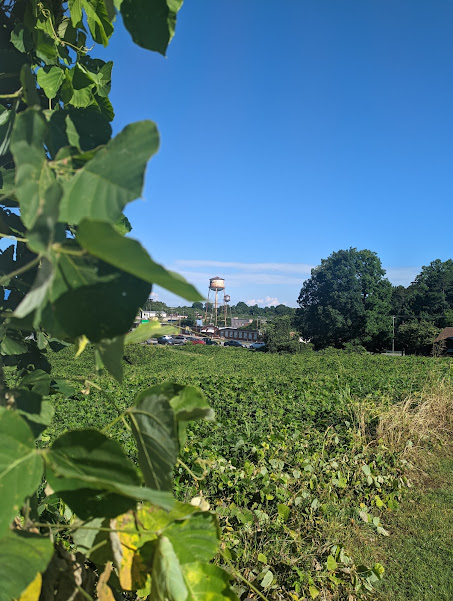
The gun rights/ownership debate continues to be an interesting one for me. I grew up rural, learned how to use guns, how to respect them, and what they were used for, and how to store them. If you grew up rural, guns were mostly for hunting, recreation (target, skeet, making noise), and protecting the animals and people from wild animals.
When people who are protesting gun ownership (regardless of type of gun) decry “It’s the guns,” you are not just calling out a tool (regardless of it being a hunting rifle or AR-15), but a reality woven into peoples’ lives. These folks are just as heartbroken about the loss of life as you are, and in fact, rural gun death rates are higher than urban death rates, due mostly to suicides (Daily Yonder) – which is another issue. What we often hear though, is that something we grew up with, something we would never think to use to harm other people, especially children, makes us wrong or evil, because we own them.
Regardless of the nuance below the headlines (just AR-15s or more background checks or better laws around purchasing) we see the headlines. We know that guns can become problems due to the complex realities of life. We know. We we want change too.
We don’t want gun related domestic violence, mass shootings, suicides, homicide, or anything else of the sort. We also don’t want armed guards, lockdown drills, and secured perimeters at the elementary school. There needs to be a conversation about this, but it has to take into consideration the role of guns in varying spaces and communities. Especially, when due to past realities that when broad legislation is passed, often rural places are disproportionately–although hopefully unintentionally–harmed (NAFTA, Affordable Care, TVA work).
I’m not saying we need to remain neutral. Action needs to happen. However, our language and approach cannot be so polarizing that it demonizes people who have a different relationship with guns.
Resources:
-
Subscribe
Subscribed
Already have a WordPress.com account? Log in now.
 Jonathan LeMaster-Smith